 Skip to main content
Important Data Note
The 2026 Danger Index uses the latest complete data available for each category. Because government datasets are released on different schedules, some underlying statistics may come from earlier reporting years.
Every year, millions of Americans face serious risks from natural disasters, traffic accidents, crime, and insurance disputes. This report analyzes the factors that make certain states more dangerous than others and ranks the top 10 states where residents face the greatest overall risk.
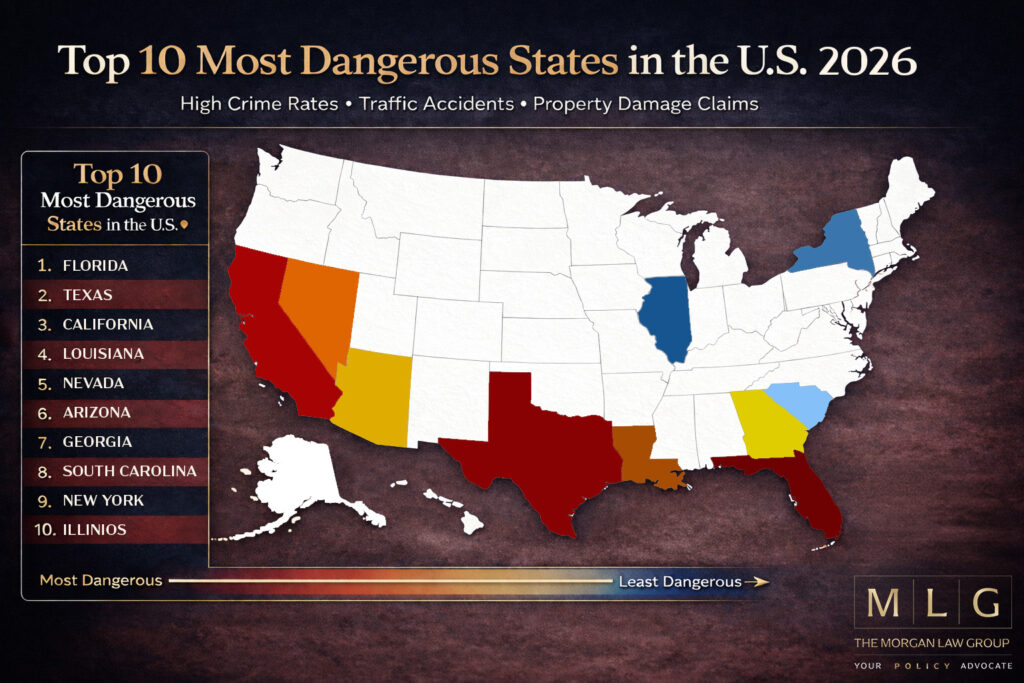
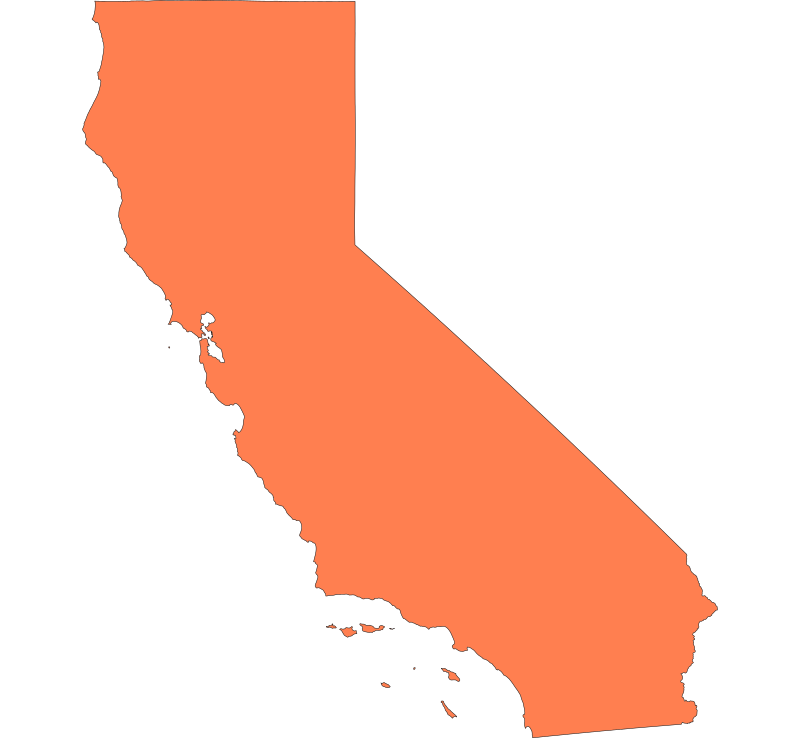
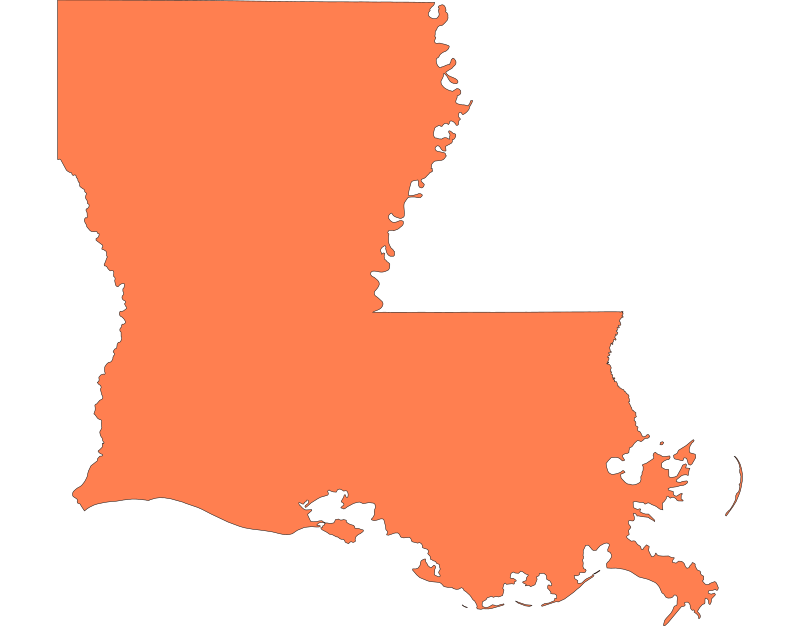
Florida ranks as the most dangerous state in the U.S. in the 2026 Danger Index. Texas, California, Louisiana, and Nevada complete the top five.
The ranking evaluates severe weather, traffic accidents, crime and injury rates, and insurance-related property losses affecting residents, homeowners, drivers, and policyholders.
The 2026 Danger Index uses the latest complete data available for each category. Because government datasets are released on different schedules, some underlying statistics may come from earlier reporting years.
Florida ranks as the most dangerous state in the U.S. in the 2026 Danger Index. Texas, California, Louisiana, and Nevada complete the top five.
The ranking considers severe-weather exposure, traffic accidents, crime and injury trends, and insurance-related property losses affecting residents, homeowners, drivers, and policyholders.
The report uses the latest complete information available for each risk category. Because government datasets follow different publication schedules, some underlying statistics may come from earlier reporting years.



This report compares broad statewide risks, including severe weather, accidents, crime, injuries, and insurance claims. For a transportation-focused comparison, explore the 2026 Car Accident Danger Index, which ranks all 50 states using traffic fatalities, dangerous driving behavior, vulnerable-road-user deaths, commercial-vehicle risk, roadway exposure, and uninsured motorists.
Florida’s position reflects a combination of recurring natural disasters, extensive flood exposure, dangerous roads, and the property and injury claims that frequently follow these events.
Florida’s location and extensive coastline expose communities to hurricanes, tropical storms, destructive winds, storm surge, and widespread property damage.
Coastal flooding, storm surge, heavy rainfall, and drainage problems can damage homes and businesses even outside the immediate path of a hurricane.
Florida’s population growth, tourism, congested metropolitan areas, and heavily traveled highways create substantial risks for drivers, passengers, pedestrians, and cyclists.
The combination of storms, flooding, vehicle crashes, and population density can lead to complex property-insurance disputes and serious personal-injury claims.
The risks affecting different states can change as new weather, accident, crime, injury, and property-loss information becomes available. The 2026 report is the current edition of The Morgan Law Group’s Dangerous States analysis.
The previous report provides a historical snapshot of the states that faced the greatest combined risks in 2025. Comparing the two editions can help readers understand how the rankings and major risk factors have evolved.
Visit the main Danger Index to explore additional rankings covering natural disasters, flooding, highways, cities, and state-specific risks.
The Danger Index compares broad statewide risks. It does not mean that every community in a highly ranked state is equally dangerous or that residents will personally experience every risk included in the report.
Weather, traffic, crime, injury, and property-loss risks can differ substantially between cities, counties, coastal communities, and inland areas within the same state.
A state may rank highly because of severe weather and property losses even if it has lower crime or traffic risk. Another state may rank highly because of accidents, injuries, or population density.
Government and industry datasets are released on different schedules. The 2026 report therefore uses the latest complete information available for each category rather than assuming every dataset was published in 2026.
The rankings provide a comparative view of statewide risk. They should not be interpreted as a prediction that a particular person, home, or business will experience an accident, disaster, crime, or insurance dispute.
For more information about the factors considered in the rankings, review the Danger Index methodology .
Featured Resource
Find legal resources, insurance claim guides, personal injury information, property damage resources, and state-specific updates for Florida, Louisiana, Georgia, Mississippi, North Carolina, and Texas.
Find out whether you may have a claim and what steps to take next.
For this report, we looked at real-world risks that affect homeowners, drivers, injury victims, and policyholders.
Hurricanes, flooding, hail, fires, tornadoes, and other disasters that cause major property damage.
High traffic volume, dangerous highways, pedestrian risks, and serious vehicle collisions.
Public safety trends, injury risk, and conditions that increase the likelihood of harm.
Frequent property claims, denied claims, delayed payments, and underpaid insurance disputes.
If you live in one of these high-risk states, being prepared can make a major difference after property damage or a serious injury.
Homeowners and business owners may face serious losses after storms, fires, water damage, mold, or roof damage.
Drivers, pedestrians, workers, and visitors may face higher injury risks in states with dense traffic and hazardous conditions.
If you experience property damage or an injury, taking the right steps early can protect your claim.
Take photos, videos, notes, receipts, and records as soon as possible.
Notify your insurance company or the responsible party promptly.
Be cautious before accepting an early offer that may not reflect the full value of your loss.
Speak with The Morgan Law Group before assuming the insurance company’s offer is fair.
Explore related research covering natural disasters, flooding, highways, cities, and location-specific risks across the United States.
Explore the states and communities facing significant hurricane, tropical-storm, storm-surge, and wind-damage exposure.
Learn how coastal flooding, heavy rainfall, storm surge, and other water-related hazards affect communities and property owners.
Review the highways where heavy traffic, serious crashes, and roadway conditions create significant risks for drivers and passengers.
Explore how traffic, crime, injuries, population density, and other conditions affect risk within major American cities.
Visit the complete Danger Index for additional rankings and state-specific research.
Find out whether you may have a claim and what steps to take next.
Learn more about property insurance claims or personal injury cases.
Common questions about the 2026 Dangerous States ranking and the risks included in the report.
Florida ranks as the most dangerous state in the 2026 Danger Index. Its position reflects the combined effects of hurricanes, flooding, property losses, heavy traffic, and accident risk. View the Florida Danger Index.
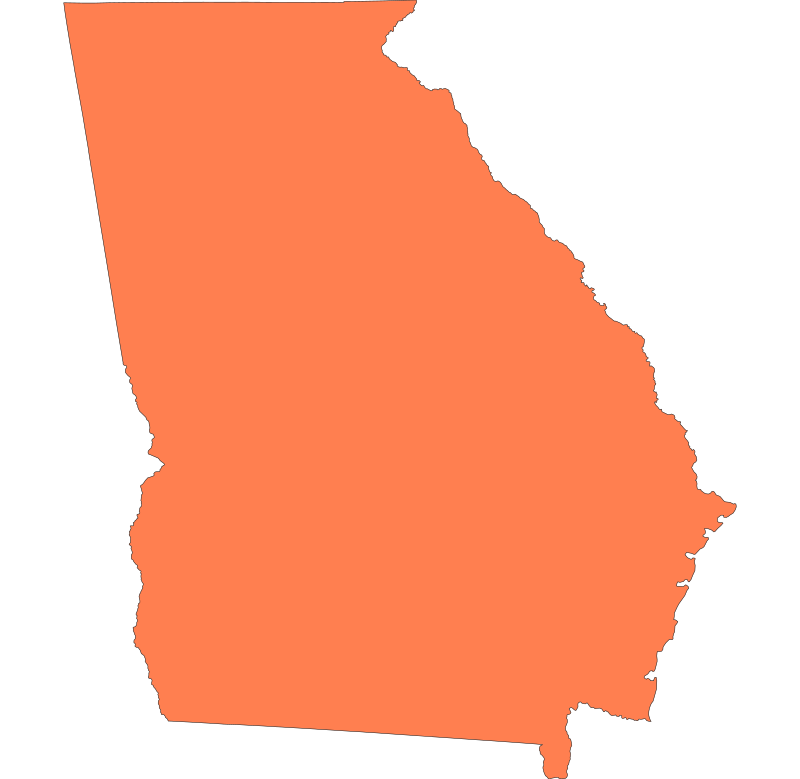
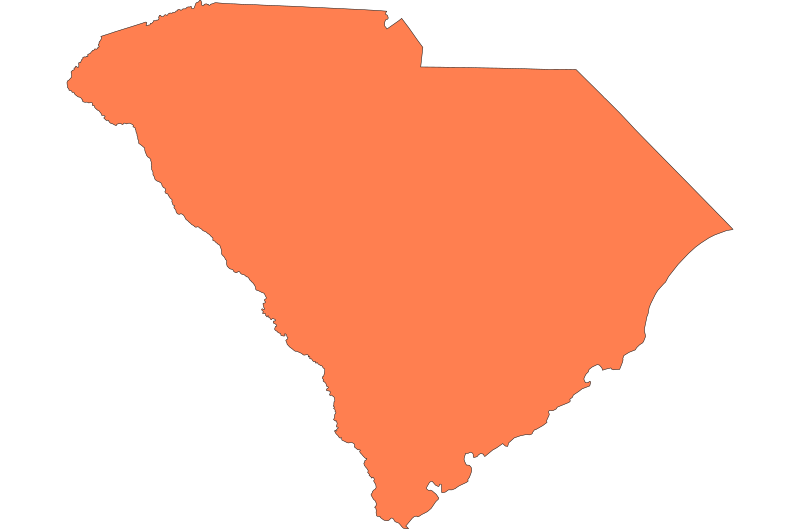
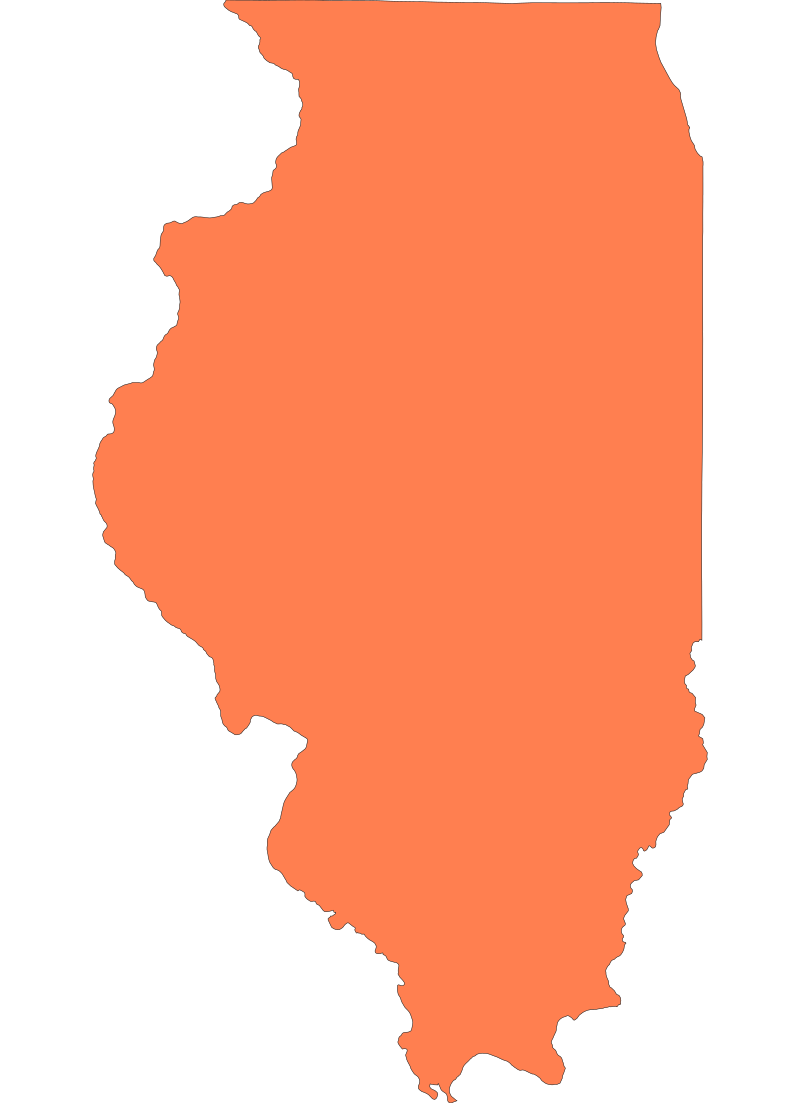
The top 10 are Florida, Texas, California, Louisiana, Nevada, Arizona, Georgia, South Carolina, New York, and Illinois.
The report considers severe-weather exposure, traffic and accident risk, crime and injury trends, and insurance-related property losses. Reporting years may vary because government and industry datasets are released on different schedules. Review the Danger Index methodology.
No. The rankings compare broad statewide conditions. Risk can vary significantly by city, county, season, roadway, and whether a community is coastal or inland.
Document what happened, preserve photographs and records, report the incident or loss promptly, and be cautious about accepting an early settlement before understanding the full extent of the damage. Find out whether you may have a claim.
Consider seeking legal advice when an insurance claim is denied, delayed, or underpaid, or when an accident causes serious injuries, substantial expenses, or a dispute over responsibility. Contact The Morgan Law Group.