Skip to main content
Blog
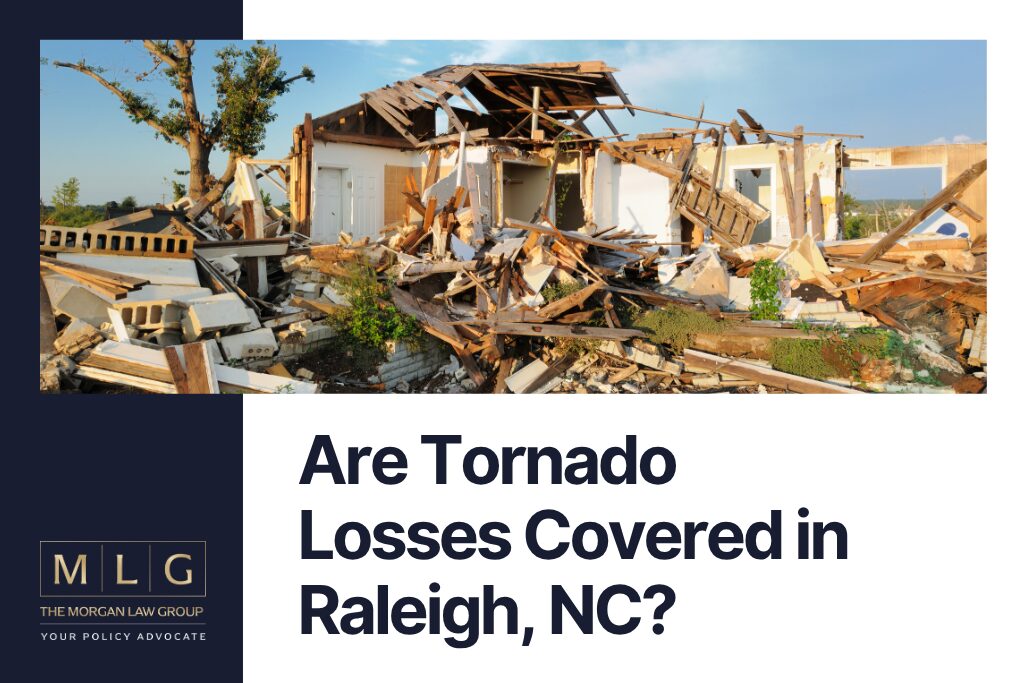
When a tornado strikes, the immediate devastation can be overwhelming: ripped roofs, collapsed walls, fallen trees, water infiltration, and total property losses.
After the shock subsides, many ask a critical question: “Is tornado damage covered by my insurance in Raleigh, NC?”
The short answer is usually yes, but many people discover gaps in coverage or disputes with their insurer only after the storm passes. That’s why working with our Raleigh tornado damage lawyer at The Morgan Law Group can make all the difference in protecting your rights as a policyholder when navigating tornado insurance claims.
Does Insurance Cover Tornado Damage in Raleigh?
Most standard homeowners insurance policies, especially HO-3 and HO-5 forms, do cover tornado damage.
Tornadoes are considered windstorm events, and wind is a named peril under typical policies in North Carolina. This means that when a tornado strikes, your dwelling, other structures (like fences or sheds), and personal belongings are generally protected under your plan.
However, policy terms can vary significantly, and some insurers may issue special deductibles, exclusions, or ambiguous language that can complicate your claim.
What is typically covered includes:
- Dwelling Damage: Structural harm to your home caused by high winds, flying debris, or collapsed roofing.
- Other Structures: Garages, fences, decks, or sheds damaged in the storm.
- Personal Property: Furniture, appliances, electronics, and clothing damaged by the tornado or resulting wind/rain.
- Additional Living Expenses (ALE): Temporary hotel stays, meals, and transportation if your home becomes uninhabitable.
In commercial insurance policies, business owners may also be covered for:
- Physical property damage
- Inventory loss
- Business interruption due to closure or uninhabitable premises
Renters insurance (HO-4) typically covers personal belongings and ALE, while condo unit owner policies (HO-6) cover interior damage and contents. The condo association’s master policy should cover exterior and common areas.
Common Losses Post-Tornado in North Carolina
Tornadoes in Raleigh and the broader Wake County region can vary in intensity but frequently result in serious, costly damage.
The most common losses policyholders face include:
- Roof Damage: The high winds and suction forces during a tornado can rip shingles, decking, or even entire sections of roofing from homes and businesses. Tornado insurance policies usually include roof repair or replacement, depending on whether you have actual cash value (ACV) or replacement cost coverage.
- Window and Siding Damage: Flying debris and extreme pressure can break windows, doors, and siding. These are typically covered under wind damage clauses.
- Water Damage: Tornadoes may allow rain to enter the structure through broken windows or roofs. If the water damage is the result of wind-driven rain entering through a storm-created opening, most policies will cover it.
- Vehicle Damage: If your car is damaged during a tornado (from debris, falling trees, etc.), your homeowners insurance will not apply. Instead, this is covered by comprehensive auto insurance.
- Tree and Debris Removal: Most homeowners insurance policies in North Carolina will provide limited coverage for removing trees that fall and damage covered structures or block access to driveways.
- Loss of Use: ALE benefits kick in when a covered event, like a tornado, makes your home temporarily uninhabitable. Keep all receipts related to hotel stays, meals, or travel for reimbursement.
Typically Not Covered by Tornado Insurance in Raleigh
While tornado damage coverage in Raleigh is usually comprehensive, there are still limitations and exclusions that homeowners should understand before disaster strikes.
- Flooding and Storm Surge: Tornadoes can bring heavy rains, and any resulting flooding or storm surge is not covered by standard homeowners insurance. You’ll need a separate flood insurance policy, either from the NFIP (National Flood Insurance Program) or a private insurer, to cover water damage caused by rising water.
- Wind-Driven Rain Without Structural Opening: If rain enters your home without any damage to the structure (say, through a closed window left open or loose sealant), your insurer may deny the claim. Most policies only cover water intrusion caused by an opening created by wind or debris.
- Anti-Concurrent Causation (ACC) Clauses: These clauses state that if both a covered peril (wind) and an excluded peril (flood) cause damage simultaneously, the entire loss may be excluded. This can be a critical factor in mixed-peril events and is one reason to consult with a tornado damage claim attorney in Raleigh when filing a claim.
- Ordinance or Law Coverage Limits: If local building codes require you to rebuild to new standards, basic policies might not cover the added costs unless you have Ordinance or Law coverage. Raleigh homeowners with older homes should strongly consider increasing these limits.
Special Deductibles and Policy Language
When it comes to tornado insurance policies, deductibles can have a big impact on your claim payout.
Standard vs. Percentage Deductibles
- Flat Deductible: A set amount (e.g., $1,000) is subtracted from your claim payout.
- Percentage Deductible: Some insurers use wind/hail or named-storm deductibles, calculated as a percentage of your dwelling coverage. This can be costly, especially on a $400,000 home.
Policy Language Can Be Confusing
Insurers may use vague or complex language to limit their liability. Words like “sudden,” “accidental,” or “direct physical loss” can be interpreted in many ways. If your insurer denies or delays your tornado claim, you may need to challenge their interpretation with the help of a Raleigh tornado damage lawyer.
Steps to Take When Filing Tornado Insurance Claims in Raleigh
Navigating tornado insurance claims after a disaster can be overwhelming, especially when you’re dealing with displacement, damaged property, and unresponsive insurers.
Here’s how to protect yourself and strengthen your claim:
- Document Everything: Take date-stamped photos and videos of all damage. Keep receipts for emergency repairs, hotel stays, meals, and temporary housing.
- Mitigate Further Damage: Your policy likely requires you to take reasonable steps to prevent further loss, such as placing tarps on your roof or boarding up broken windows.
- File Promptly: North Carolina doesn’t have a strict deadline for settling property claims, but insurers must acknowledge your claim within 30 days. Don’t wait to start the process.
- Review Your Policy: Understand your coverage limits, exclusions, and deductibles. Check whether you have replacement cost or ACV on personal property and roofing.
- Submit a Proof of Loss: Your insurer may require a sworn proof of loss within 60 days of request. For flood insurance claims (NFIP), this is due within 60 days of the event.
- Seek Legal Help: If your insurer undervalues, delays, or outright denies your tornado damage claim, it may be time to consult with a tornado damage claim attorney in Raleigh, NC.
Let Us Help You Recover Through Tornado Insurance Claims in Raleigh
Recovering from a tornado can be physically, emotionally, and financially draining. And while insurance is supposed to be your safety net, it often becomes yet another obstacle. When insurance companies delay, deny, or devalue your claim, you deserve an advocate who will fight for you.
The Morgan Law Group has a reputation for helping policyholders in North Carolina secure the tornado damage settlements they’re rightfully owed. With deep knowledge of the insurance claims process and the tactics insurers use to avoid paying, we stand by Raleigh residents after storms, so they don’t have to face recovery alone.
Whether your home suffered roof damage, water intrusion, or a total loss, a Raleigh tornado damage lawyer from our team is ready to help you understand your rights and maximize your claim. Call our office in Raleigh today at (984) 273-8547 or contact us using our online form for a free consultation.