 Skip to main content
Blog, Hurricane Claims, Hurricane Damage Claims, Insurance Claims, Property Insurance Claims
The New 2026 Hurricane Cone Is Here: Why Homeowners Should Pay Attention
Why the New 2026 Hurricane Cone Matters
For years, many homeowners have relied on one familiar image during hurricane season: the hurricane cone.
As soon as a storm forms, people often ask one question:
“Am I inside the cone?”
But that question may no longer tell the full story.
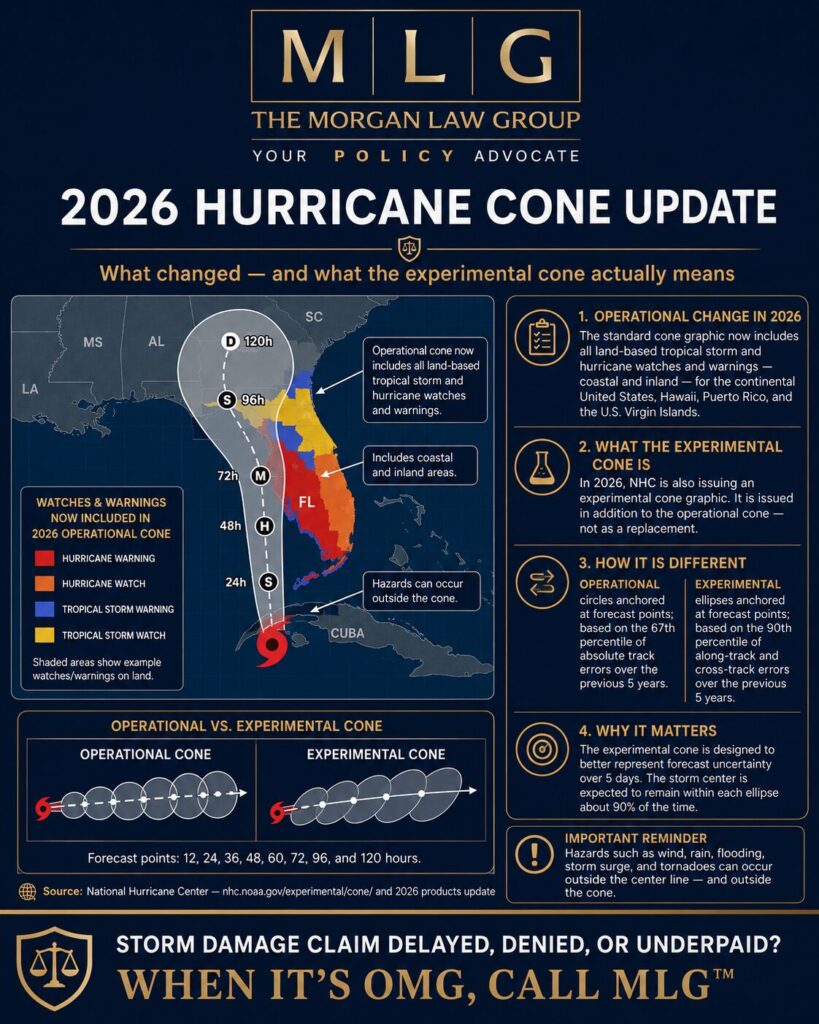
For the 2026 hurricane season, the National Hurricane Center is updating the hurricane cone after two years of testing new forecast graphics designed to better communicate storm risks outside the projected track.
The update serves as an important reminder: the center of a storm is not the only place where damage happens.
Some of the most dangerous impacts from hurricanes often occur well beyond the cone itself.
These impacts can include:
• Heavy rainfall and flash flooding
• Damaging wind far outside the eye
• Storm surge in coastal areas
• Tornadoes spawned by outer bands
• Fallen trees and debris damage
• Roof and water intrusion claims
Many homeowners mistakenly assume that if their home is outside the cone, they are safe from major impacts. In reality, severe weather frequently stretches hundreds of miles beyond the storm’s projected center path.
The updated graphics aim to help people move away from treating the cone like a hard boundary line.
What Has the Hurricane Cone Traditionally Shown?
The traditional cone of uncertainty was primarily designed to show where the center of the storm was expected to travel.
It was never intended to predict:
• The full size of the storm
• Wind impact zones
• Flooding areas
• Tornado risk
• Rainfall amounts
• Storm surge reach
Yet many homeowners interpreted it that way.
If a home appeared outside the cone, people often assumed they did not need to prepare.
That misunderstanding has led many residents to underestimate storm risks.
For a better understanding of hurricane-related insurance issues, click here.
Why the New Hurricane Cone Is Important for Homeowners
The updated 2026 hurricane graphics are intended to communicate a simple message:
Storm impacts extend beyond the track.
This matters because property damage frequently happens far from where the center of the hurricane makes landfall.
For example, homeowners outside the projected path may still experience:
Wind Damage
Strong winds can damage:
• Roof shingles
• Fencing
• Windows
• Exterior structures
• Trees surrounding the property
Water Damage
Heavy rainfall can create:
• Roof leaks
• Interior water intrusion
• Flooding around the property
• Mold risks after the storm
Tornado Activity
Many hurricanes produce tornadoes in outer rain bands that develop far from the storm’s center.
A homeowner may never be near the eye wall and still experience severe property damage.
Make Sure You Are Prepared for Hurricane Season
Step 1: Review Your Insurance Policy Before Hurricane Season
As hurricane season approaches, now is the time to review your policy.
Pay close attention to:
• Hurricane deductibles
• Wind coverage
• Flood exclusions
• Roof limitations
• Additional Living Expenses (ALE) coverage
Many homeowners discover coverage gaps only after damage occurs.
Our Tips for Reviewing Your Policy
Step 2: Document Your Property Before Storms Arrive
Because storm impacts may extend beyond expected areas, homeowners should prepare early.
Document your property by:
• Photographing the roof and exterior
• Recording a full video walkthrough
• Capturing appliances and valuables
• Saving receipts for major items
• Backing up documentation online
Pre-storm documentation can become important if insurers question the cause or extent of damage.
Our Tips for Document Your Property
Prepare Before Hurricane Season Intensifies
Don’t wait until your home falls inside the cone. Understanding your coverage before a storm approaches can help avoid surprises later.
Common Mistakes Homeowners Make During Hurricane Season
Many claim problems start with preventable mistakes:
• Waiting to prepare until the home appears inside the cone
• Assuming flood damage is covered automatically
• Failing to document the property beforehand
• Waiting too long to report damage
• Accepting early settlement offers without reviewing damages fully
Get Help If Your Hurricane Claim Becomes a Problem
The Morgan Law Group helps homeowners with denied, delayed, and underpaid hurricane insurance claims.
FAQ: The 2026 Hurricane Cone Update
What is changing with the hurricane cone in 2026?
The National Hurricane Center is updating forecast graphics to better show storm risks and impacts that can occur outside the projected center track.
Can my home still be damaged if I am outside the cone?
Yes. Wind, rain, flooding, storm surge, and tornadoes frequently affect areas well outside the projected storm path.
Why do people misunderstand the cone?
Many people assume the cone predicts where all damage will happen, but historically it only represented where the storm’s center was likely to track.
Should homeowners prepare even if they are outside the cone?
Yes. Dangerous impacts can occur far from the center of a storm, making preparation important regardless of exact location.
