 Skip to main content

Homeowners Insurance, Property Insurance Claims, Storm Damage
Does Homeowners Insurance Cover Tornado Damage in Mississippi?
Why Tornado Damage Claims Are a Major Issue in Mississippi
Severe storms and tornadoes can cause devastating property damage across Mississippi in a matter of minutes. From roof failures and broken windows to structural collapse and water intrusion, homeowners are often left dealing with major repairs and complicated insurance claims.
After a tornado hits, one of the most common questions homeowners ask is whether their insurance policy actually covers the damage.
In many cases, homeowners insurance does cover tornado-related damage—but coverage depends on:
- The type of damage
- The cause of the loss
- Your policy language and exclusions
Understanding what your policy may cover can help you avoid delays, disputes, and underpaid claims after a severe storm.
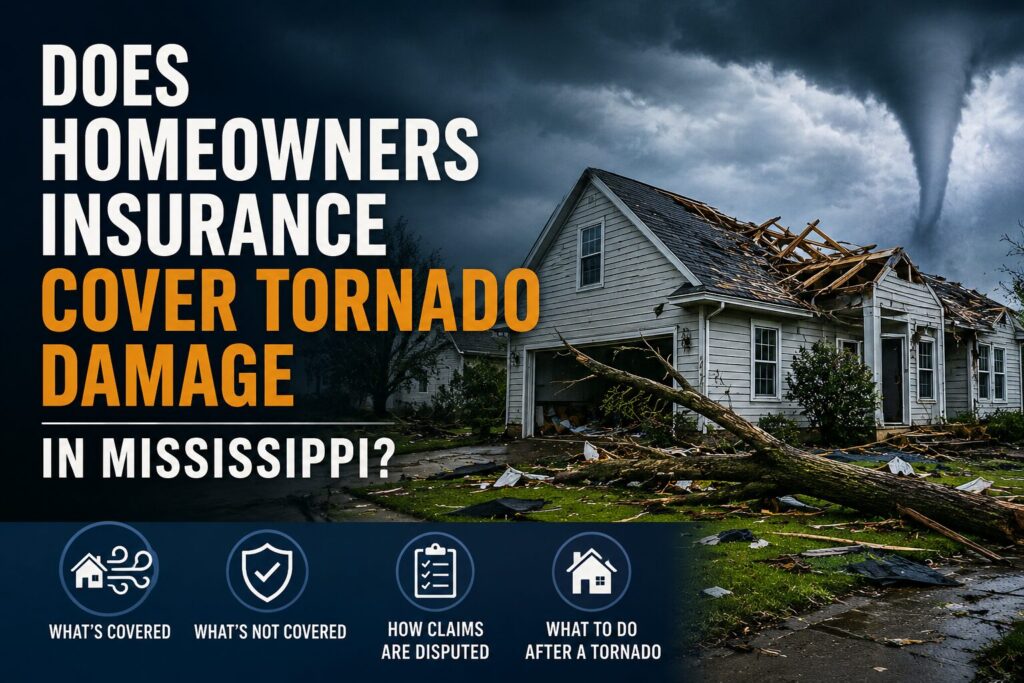
What Tornado Damage Is Typically Covered?
Most standard homeowners insurance policies generally cover wind-related tornado damage.
This may include:
- Roof damage from high winds
- Broken windows and siding
- Structural damage to the home
- Damage from fallen trees
- Interior water damage caused by storm-created openings
- Damage to personal belongings
Coverage is typically subject to:
- Your deductible
- Policy limits
- Any applicable exclusions
To better understand homeowners insurance coverage, read:
What Does Homeowners Insurance Cover?
Roof Damage
Tornadoes frequently cause significant roof damage, including:
- Missing shingles
- Roof punctures from debris
- Structural weakening
- Water leaks caused by storm openings
Insurance companies sometimes attempt to argue that roof damage resulted from age or maintenance issues instead of storm activity.
Structural Damage
High winds can damage:
- Walls
- Garages
- Fences
- Attached structures
- Foundations in severe cases
Structural repairs after tornadoes can become extremely expensive, especially if hidden damage exists.
Fallen Trees and Debris
Most policies may also cover damage caused by:
- Fallen trees
- Flying debris
- Detached storm objects striking the home
This can include both repair costs and debris removal expenses.
Interior Water Damage
If wind creates an opening in the roof or walls, resulting interior water damage may also be covered.
This can include:
- Ceiling damage
- Flooring damage
- Damaged drywall
- Damaged furniture and belongings
What Tornado Damage May NOT Be Covered?
Even when tornado damage is severe, some losses may still be excluded.
Common exclusions include:
- Flood damage from rising water
- Pre-existing roof damage
- Wear and tear
- Long-term maintenance issues
- Mold caused by delayed repairs
One of the biggest issues homeowners face after tornadoes is flood-related damage.
Flood Damage
Standard homeowners insurance policies typically do not cover flooding caused by:
- Heavy rainfall accumulation
- Flash flooding
- Overflowing waterways
- Rising groundwater
Separate flood insurance is usually required for those losses.
Wear and Tear Exclusions
Insurance companies often deny claims by arguing:
- Roofing materials were already deteriorating
- Damage existed before the tornado
- The home was not properly maintained
These disputes are especially common with older roofs.
Maintenance Issues
Policies may also exclude damage related to:
- Long-term leaks
- Rotting materials
- Neglected repairs
- Structural deterioration
If your claim is denied, review:
My Home Insurance Claim Was Denied — What Do I Do Now?
How Insurance Companies Dispute Tornado Claims
Even when damage appears obvious, insurance companies may still challenge parts of your claim.
Common disputes include:
- Arguing damage existed before the storm
- Claiming roof deterioration caused the loss
- Underestimating repair costs
- Excluding certain damage areas
- Delaying inspections and payments
After major storms, insurers often handle a high volume of claims at once, which can create additional delays and problems for homeowners.
Learn more about claim disputes here:
How to Get an Insurance Company to Pay a ClaimGet Help With a Mississippi Tornado Damage Claim
If your tornado or storm damage claim was delayed, denied, or underpaid, we can help you understand your options and next steps.
What Mississippi Homeowners Should Do After Tornado Damage
The steps you take immediately after a tornado can significantly impact your insurance claim.
Document the Damage
Take photos and videos of:
- Roof damage
- Structural damage
- Interior water intrusion
- Broken windows
- Fallen trees
- Damaged belongings
Documentation should happen before cleanup begins whenever possible.
Learn how to properly document damage:
How to Document Storm Damage for Your Insurance Claim
Prevent Further Damage
Homeowners should take reasonable steps to prevent additional losses, including:
- Tarping roof openings
- Boarding broken windows
- Removing standing water if possible
Keep receipts for all emergency repairs and supplies.
Contact Your Insurance Company
Report the damage as soon as possible after the storm.
Provide:
- Photos and videos
- Initial repair estimates
- Emergency repair receipts
- A detailed description of the damage
Keep Repair Receipts and Records
Maintain copies of:
- Contractor estimates
- Hotel and temporary housing expenses
- Insurance communications
- Repair invoices
- Claim numbers and adjuster information
Strong records can help protect your claim if disputes arise later.
How Tornado Deductibles and Wind Deductibles Work
Some homeowners policies include separate deductibles for:
- Wind damage
- Named storms
- Severe weather events
These deductibles may be:
- Higher than standard deductibles
- Percentage-based instead of flat dollar amounts
This means homeowners may owe more out of pocket before insurance coverage applies.
Understanding your deductible before filing a claim is important to evaluating your potential recovery.
Can You Reopen or Dispute a Tornado Damage Claim?
In some situations, homeowners may be able to challenge or reopen a claim if:
- Additional damage is discovered
- The insurance estimate was too low
- The claim was partially denied
- Hidden structural damage appears later
This is especially common after tornadoes, where roof and water damage may worsen over time.
Learn more here:
Can I Appeal a Denied Homeowners Claim?
Common Mistakes Homeowners Make After Tornado Damage
After severe storms, homeowners often make mistakes that can weaken their claims.
Common issues include:
- Cleaning up before documenting damage
- Throwing away damaged items too early
- Accepting low settlement offers immediately
- Failing to keep repair receipts
- Waiting too long to report damage
Avoiding these mistakes can help protect your claim and improve your chances of a fair payout.
Don’t Let an Insurance Company Undervalue Your Claim
If your tornado damage claim was underpaid or delayed, we can help you understand your rights and pursue the compensation you may be owed.
FAQ: Tornado Damage Insurance Claims in Mississippi
Does homeowners insurance cover tornado damage in Mississippi?
Most homeowners insurance policies generally cover tornado-related wind damage, including roof damage, structural damage, and damage caused by fallen trees or debris.
Does homeowners insurance cover flood damage after a tornado?
No, standard homeowners insurance policies typically do not cover flood damage caused by rising water or flash flooding. Separate flood insurance is usually required.
Why would a tornado damage claim be denied?
Claims may be denied due to exclusions, disputes over pre-existing damage, wear and tear arguments, or disagreements about the cause of the damage.
What should I do immediately after tornado damage?
You should document all damage, take photos and videos, prevent further damage if possible, and contact your insurance company as soon as possible.
Can I dispute an underpaid tornado damage claim?
Yes, homeowners may be able to dispute underpaid claims by providing additional documentation, contractor estimates, or evidence of additional damage.
