Skip to main content


Blog
From hurricanes and tropical storms to wind-driven rain and hail, residents and business owners know how quickly a passing system can leave behind lasting damage. For many, the only lifeline after a storm is insurance, yet not every insurance policy guarantees full payment for storm damage in Raleigh, North Carolina.
This is where working with a trusted Raleigh storm damage claim attorney can help ensure your rights are protected under the insurance laws. At The Morgan Law Group, we help policyholders in North Carolina, including Raleigh, who experience storm damage, file an insurance claim and receive a payout that insurers owe them based on their purchased insurance policy.
Insurance Coverage for Storm Damage in Raleigh
Raleigh experiences a variety of storms throughout the year, including hurricanes, tropical storms, hailstorms, and powerful wind events.
While some of these storms can be predicted days in advance, others strike with little warning. That unpredictability is why property insurance plays such a vital role.
Wind and Hail Damage
Standard homeowners and commercial property insurance policies in Raleigh usually cover wind and hail damage.
This includes damage to:
- Roof shingles ripped off or punctured
- Siding and windows broken by debris
- Outdoor HVAC units displaced or crushed
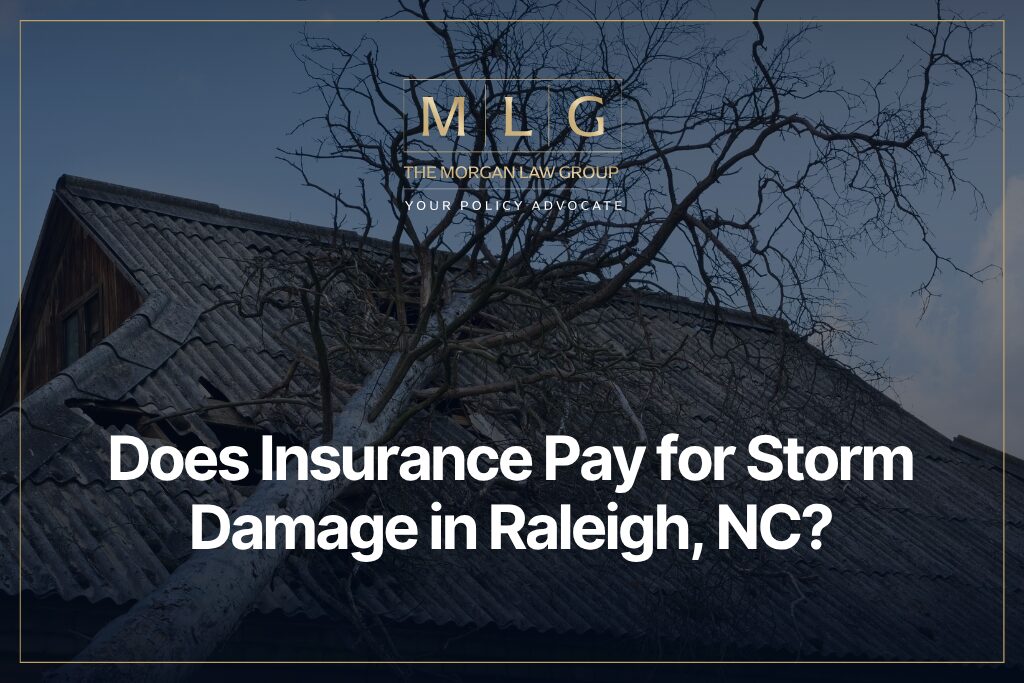
- Structural impacts from fallen trees
Windstorm coverage is a named peril in most base policies. However, during named hurricanes or tropical storms, a higher percentage-based deductible often applies. For example, a 2% deductible on a $500,000 home could mean the first $10,000 of storm damage is your responsibility.
Water Damage from Wind-Driven Rain
When rain enters your property due to a storm-compromised roof, siding, or window, the resulting water damage may be covered. The key distinction is that the water must have entered due to a covered peril, like wind tearing off roof shingles. If the rain seeps through pre-existing damage or an open window, your insurer may deny the claim.
Lightning and Fire
If a storm leads to a lightning strike that causes a fire or electrical surge, these types of damage are typically included in base policies. This could include appliance damage, interior fires, or fried electrical systems.
Debris Removal and Temporary Repairs
Most policies include allowances for debris removal and emergency mitigation services. This could cover tarping your roof, boarding up windows, or hiring cleanup crews. Insurers also require policyholders to take reasonable steps to mitigate further loss, and may not pay for preventable damages caused by delays in repairs.
Optional Insurance Coverage for Other Damages Post-Storm
While base insurance policies offer broad protections, not all forms of storm damage are automatically included. Some of the most devastating losses require separate or add-on policies.
Flood Damage
One of the biggest gaps in storm coverage is flooding. Even if a hurricane or heavy rainfall causes your property to fill with water, flood damage is excluded from standard homeowners and business policies. Flooding refers to rising water from the ground, such as overflow from rivers, creeks, storm drains, or heavy rainfall accumulating faster than it can drain.
To be protected, property owners in Raleigh need a flood insurance policy, either through the National Flood Insurance Program (NFIP) or a private insurer.
Coverage generally includes:
- Structural damage to floors, walls, and foundation
- Replacement of damaged electrical and HVAC systems
- Contents lost due to flooding
Without a flood policy, even extensive storm-related water damage may result in a denied claim.
Sewer Backup and Drain Overflow
Another optional endorsement worth considering in Raleigh is water backup coverage. When municipal storm systems are overwhelmed during a storm, water can back up into your property through drains, toilets, or sump pumps. Most base policies exclude this type of damage unless you’ve added an endorsement.
Earth Movement from Storms
Landslides and mudslides triggered by severe rain or storm runoff are not covered under typical policies. These perils are often excluded unless you have specialized “earth movement” coverage.
Business Interruption Insurance
For commercial property owners, business interruption coverage can be essential. This policy pays for lost income if your business operations are halted due to a covered storm event.
It may also cover temporary relocation costs and fixed operating expenses. Without this, businesses that suffer physical damage or are forced to close temporarily after a storm may receive no compensation for revenue loss.
What Happens if Insurance Denies or Undervalues a Storm Claim?
Unfortunately, even if you carry the right insurance, your claim isn’t guaranteed to be paid fairly or at all. Homeowners and business owners in Raleigh often face delays, low offers, or outright denials after filing.
Common reasons for claim denial or underpayment include:
- Alleging Pre-Existing Damage: Insurers may argue the damage existed before the storm, especially if your roof or siding was aged or already in poor condition.
- Improper Documentation: If you can’t provide sufficient proof of the damage, like photos, repair estimates, or weather reports, the insurer may delay or deny your claim.
- Policy Exclusions: Damage caused by flooding or poor maintenance is usually excluded. Insurers might cite these exclusions to avoid paying storm-related claims.
- Partial Payment and Depreciation: Some insurers pay only the actual cash value (ACV) rather than replacement cost, especially if your policy doesn’t include full replacement cost coverage. This means your payout could be significantly reduced based on the item’s age or wear.
- Late Filing: North Carolina policies often include deadlines for reporting and proving your loss. Missing these windows can void your coverage rights.
If you’ve encountered any of these issues, it’s important to understand your rights. Learn more about what to do when an insurance claim is denied.
How to Protect Your Storm Damage Claim and Ensure Full Payment
Whether you’re dealing with a minor roof leak or major structural collapse, your actions immediately after the storm can make or break your insurance claim.
- Document the Damage: Take clear, dated photos and videos of all damaged areas, including exterior structures, interior walls, flooring, and personal property. Make an inventory of any contents affected by the storm.
- Prevent Further Loss: Apply tarps, shut off water sources, and secure broken windows. Most policies require you to prevent additional damage. Failure to do so may limit what the insurer will pay.
- Review Your Policy: Understand your coverage limits, deductibles (especially for named storms), and any exclusions. Pay attention to whether your policy covers replacement cost or only actual cash value.
- File Promptly and Accurately: Start your claim as soon as possible. For guidance, follow this resource on filing an insurance claim after a storm.
- Get Professional Help if Needed: If the insurance company undervalues your claim or unreasonably delays payment, working with experienced insurance claim attorneys may help you recover what you’re owed. A skilled legal team can advocate on your behalf, review your policy terms, and negotiate fair compensation.
Know What Your Insurance Covers Before the Next Storm Hits
Understanding the scope of your insurance coverage for storm damage is your first line of defense. Whether you’re dealing with wind, hail, or water intrusion, your ability to document, respond, and follow up properly can directly impact how much your insurer will pay.
The Morgan Law Group helps property owners in Raleigh handle storm damage claims and challenge unfair decisions. If your home or business suffered loss after a storm and you believe your insurer isn’t holding up their end of the bargain, don’t hesitate to call us at (984) 468-7918 or contact us using our online form for a free consultation about your storm damage claim at our office in Raleigh.