Skip to main content

Blog
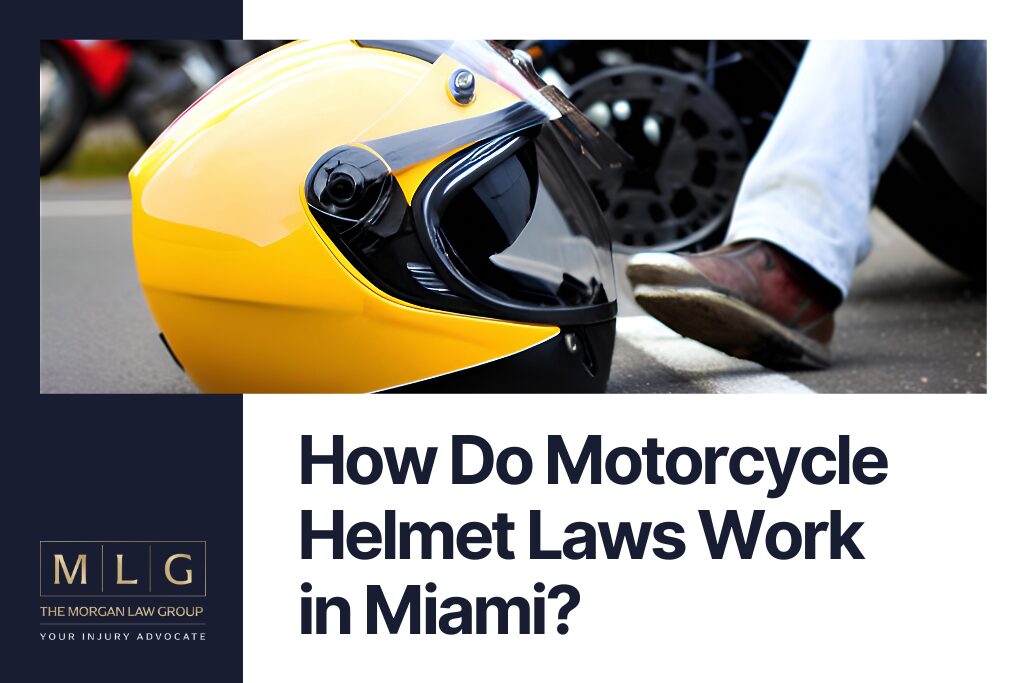
Motorcycle helmet laws in Miami operate under Florida’s statewide motorcycle safety laws, which require most riders to wear a motorcycle helmet unless they meet a narrow insurance-based exemption. In short, Florida gives adult riders some choice, but that choice carries legal and financial consequences, especially after a crash.
Motorcycle helmet laws play a significant role in how injury claims are evaluated, which is why many riders and passengers seek guidance from our Miami motorcycle accident attorney at The Morgan Law Group after a collision, for legal representation in motorcycle accident claims.
Miami Motorcycle Helmet Laws
Motorcycle helmet rules fall under Florida Statute §316.211, which outlines who must wear a helmet, the required safety standards, and the exemptions permitted under state law.
Although Florida offers riders some discretion, the statute is far from optional.
Who Is Required to Wear a Helmet?
Miami motorcycle operators and passengers under the age of 21 must wear a motorcycle helmet that meets federal safety standards. There are no exceptions for minors. Even riding on private property or as a passenger on a friend’s bike does not change the rule.
For riders 21 and older, helmet use is mandatory unless the person carries at least $10,000 in medical benefits coverage through an insurance policy. This special allowance is unique to Florida, but it is also one of the most misunderstood helmet provisions in the state.
Take note that:
- The $10,000 must be specifically for medical benefits, not liability coverage or general insurance limits.
- Law enforcement may request proof of this insurance if there is reasonable cause.
- Not having the required coverage makes helmet use mandatory for every ride, regardless of age.
Without the proper coverage, an adult rider cannot legally opt out of helmet use, even if they have many years of experience on the road.
What’s the Approved Motorcycle Helmet?
To comply with motorcycle helmet laws, a rider’s helmet must meet Federal Motor Vehicle Safety Standard (FMVSS) 218. These helmets are commonly referred to as “DOT-approved” because they display the Department of Transportation certification label.
A compliant helmet must:
- Meet the impact absorption requirements established by the federal government.
- Cover enough of the head to protect the skull and reduce the likelihood of severe trauma.
- Include a permanent, legible certification sticker showing that the helmet meets FMVSS 218 standards.
Uncertified or novelty helmets, often sold online or at roadside stands, do not satisfy Florida law. They also offer minimal real-world protection, especially against severe head trauma. Certified helmets dramatically reduce the risk of a catastrophic injury, such as a brain injury in a motorcycle accident, a common outcome in motorcycle collisions.
Who is exempted from Helmet Laws?
Aside from adult riders with $10,000 medical benefits insurance, exemptions may also apply to:
- Enclosed cabs: Operators of motorcycles equipped with fully enclosed cabs are not required to wear helmets.
- Mopeds and bicycles: Helmet requirements for mopeds and bicycles fall under different statutes and are based largely on engine size and speed capability. Slow, low-power mopeds under certain thresholds may fall outside the motorcycle helmet statute.
While exemptions exist, relying on them carries serious risks, both medically and in terms of future compensation after a crash.
How Helmet Use Affects Motorcycle Accident Claims in Miami
Helmet choices have profound consequences when pursuing an injury claim. Riders injured in Miami often underestimate how insurance companies may use helmet-related arguments to reduce payout amounts, even if the other driver clearly caused the collision.
Some of the major legal considerations shape these claims:
1. Comparative Negligence in Florida
Florida follows a modified comparative negligence rule, meaning your compensation can be reduced if the insurer proves you bear some responsibility for your injuries, and the law bars compensation entirely if the rider is found more than 50% at fault.
Helmet nonuse can give insurers a basis to argue that:
- The rider contributed to the severity of their injuries
- Their compensation should be reduced proportionately
This does not mean a rider without a helmet is automatically at fault. Liability still hinges on who caused the crash. But insurers consistently argue that failing to wear a helmet contributed to the extent of injuries.
2. Medical Evidence
When a rider suffers serious injury, the insurer may claim that wearing a helmet would have prevented or reduced those injuries. Medical expert opinions, accident reconstruction analysis, and helmet certification data frequently come into play.
A small difference in injury severity can dramatically change the damages awarded. This is why riders often work with motorcycle crash attorneys in Miami. Injury claims involving helmet issues demand a more precise use of medical and safety evidence.
3. Insurance Disputes
Insurers routinely challenge claims involving helmet nonuse.
They may argue:
- The rider did not meet the insurance coverage requirement for riding without a helmet.
- The helmet worn was not DOT-approved.
- The rider was partially responsible for worsening their own injuries.
These are not always grounded in fact, but they are strategic. The goal is to minimize the claim’s value.
Talk to a Miami Motorcycle Crash Attorney to Learn More
Florida motorcycle helmet laws give riders some flexibility when it comes to compliance, but that flexibility comes with legal and financial risks that influence nearly every part of an injury claim in Miami. Whether a rider complied with the statute, carried the required insurance, or chose to forgo a helmet, these details shape how insurers evaluate responsibility and how damages are calculated.
If you or someone you care about was hurt in a motorcycle crash in Miami, The Morgan Law Group can help injured persons pursue compensation, challenge unfair insurance practices, and address helmet-related disputes that arise after a collision. Our motorcycle accident attorneys represent injured riders across Miami and understand how motorcycle helmet laws can shape the outcome of accident claims.
Call us today at (305) 614-5235 or contact us using our online form for a free consultation about your motorcycle accident claim at our office in Miami.