Skip to main content

Augusta, Car Accident, Georgia, Personal Injury
If you are hit by an uninsured driver in Augusta, the absence of liability insurance does not automatically prevent you from recovering compensation. You may have coverage through your own automobile policy, and other parties or insurance policies may also be responsible depending on how the collision occurred.
However, an uninsured-motorist claim is not automatic. You still need to document the accident, establish the other driver’s responsibility, prove your injuries and losses, comply with your policy, and protect important legal deadlines.
The steps you take immediately after the collision can significantly affect your ability to recover medical expenses, lost income, vehicle-repair costs, and other damages.
What Should You Do Immediately After the Accident?
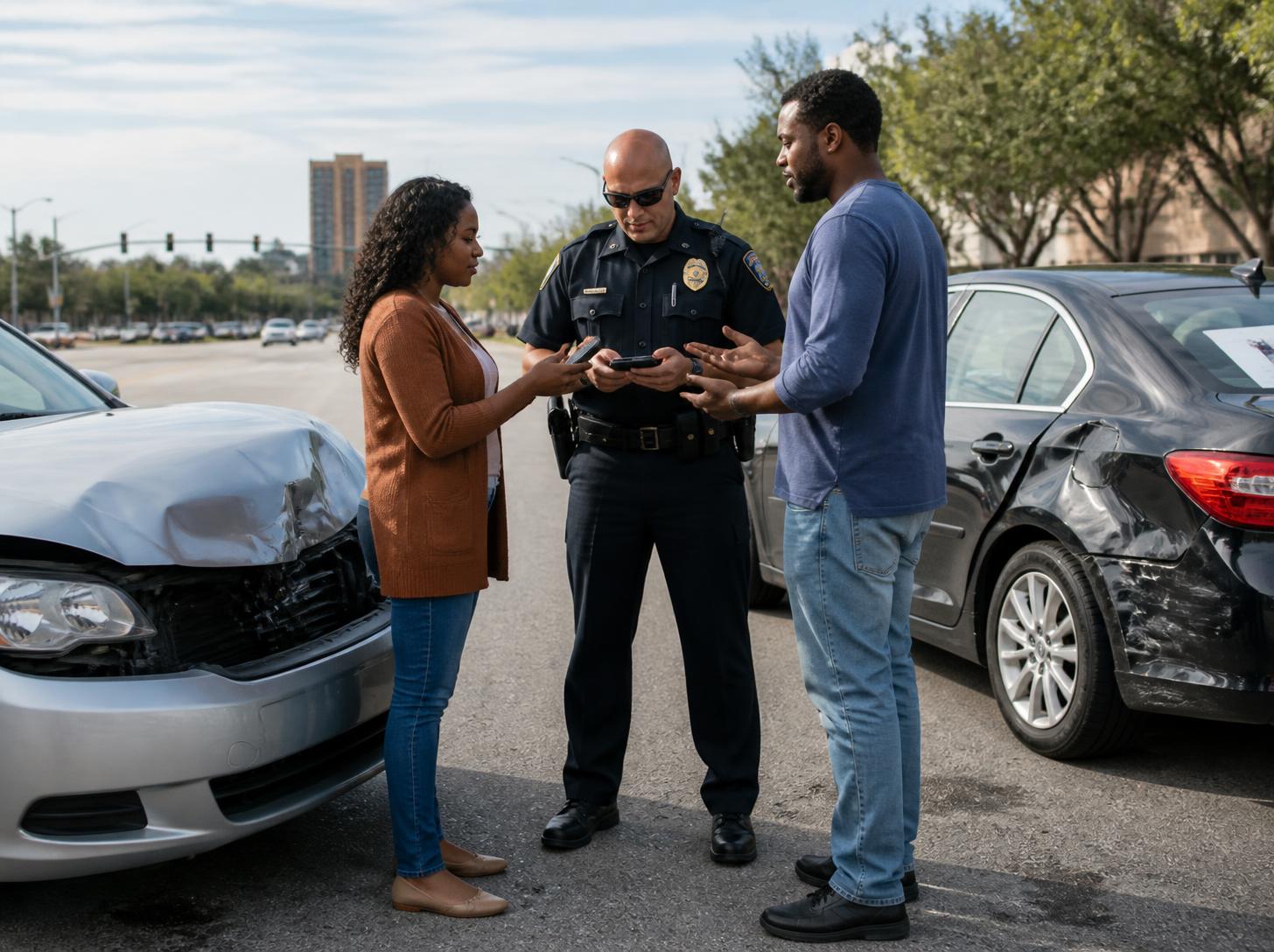
Treat an accident involving a potentially uninsured driver like any other serious collision. Protect everyone’s safety, report the crash, obtain medical attention, and preserve as much evidence as possible.
- Move to a safe location when possible. Do not remain in an active traffic lane if the vehicles can be moved safely.
- Call 911. Tell the dispatcher if anyone is injured, traffic is blocked, the other driver is attempting to leave, or the driver cannot provide insurance information.
- Request medical assistance. Accept emergency evaluation when you are injured, disoriented, experiencing pain, or unsure about your condition.
- Do not confront the other driver. A driver without insurance may become anxious or leave the scene. Allow law enforcement to handle the situation.
- Exchange identifying information. Obtain the driver’s name, address, telephone number, driver’s license number, license-plate number, and vehicle information.
- Ask for the insurance information presented. A driver may provide an expired card, a canceled policy, or information for a policy that does not cover the vehicle or driver.
- Photograph the scene. Document the vehicles, license plates, damage, debris, road markings, traffic controls, weather, lighting, and surrounding businesses or residences.
- Identify witnesses. Obtain names and contact information before witnesses leave.
- Record what the other driver says. Note statements about fault, insurance, vehicle ownership, employment, or why the collision occurred. Do not argue or attempt to obtain a recorded confession.
- Notify your insurance company. Report the collision promptly without speculating about fault or minimizing your injuries.
Our Georgia guide explains additional steps to take after a car accident, including evidence preservation and communication with insurance companies.
How Do You Confirm That the Other Driver Is Uninsured?
Do not rely exclusively on what the other driver says at the scene. A driver may mistakenly believe a policy is active, present information for the wrong vehicle, or provide a card for coverage that expired before the accident.
The driver may ultimately be considered uninsured because:
- No automobile liability policy existed on the accident date
- The policy expired or was canceled before the collision
- The driver was excluded from the policy
- The vehicle was not covered under the policy presented
- The insurer legally denies coverage for the accident
- The insurance company is insolvent and cannot pay the claim
- The driver leaves the scene and cannot be identified
- The available liability coverage is insufficient to compensate the injured person fully
Your insurance company may investigate the other vehicle, contact the reported carrier, request written confirmation of the coverage status, and determine whether the accident qualifies for uninsured- or underinsured-motorist benefits.
Keep copies of the insurance card, police report, correspondence, coverage-denial letters, and every document identifying the driver or vehicle. These records may become important if the insurers disagree about whether liability coverage existed.
What Is Uninsured-Motorist Coverage in Georgia?
Uninsured-motorist coverage, commonly called UM coverage, is automobile insurance designed to protect an insured person when the responsible driver has no applicable liability insurance. Georgia law also treats certain inadequately insured vehicles as uninsured for purposes of UM coverage.
Depending on the policy and circumstances, UM coverage may apply to:
- Medical expenses
- Future medical care
- Lost wages and reduced earning capacity
- Physical pain and suffering
- Emotional and psychological harm
- Permanent impairment or disfigurement
- Loss of consortium
- Damage to an insured vehicle or covered personal property
- Wrongful-death damages
UM coverage generally does not pay simply because the other driver was uninsured. The injured person must ordinarily establish the uninsured driver’s legal responsibility and prove the amount of the resulting damages.
Is Uninsured-Motorist Coverage Required in Georgia?
Georgia automobile insurers generally must include or offer uninsured-motorist coverage in policies issued in the state, but a named insured may reject the coverage in writing. The amount shown on the declarations page therefore needs to be reviewed rather than assumed.
Request and examine:
- The complete automobile policy
- The declarations page in effect on the accident date
- Every UM endorsement
- Any written rejection of UM coverage
- Any selection of limits lower than the liability limits
- Any selection of reduced-by rather than added-on coverage
- Policies covering other vehicles in the household
- Commercial or employer policies that may apply
- Umbrella or excess policies and their endorsements
Do not rely solely on an insurance card or a brief coverage summary. Those documents may not identify the full policy language, available UM limits, deductibles, exclusions, or other applicable policies.
What Is the Difference Between Uninsured and Underinsured Drivers?
An uninsured driver has no applicable liability insurance for the collision. An underinsured driver has liability insurance, but the available limits are insufficient to compensate the injured person for the full value of the covered losses.
| Coverage Situation | What It Means | Potential Source of Recovery |
|---|---|---|
| Uninsured driver | The responsible driver has no applicable liability coverage. | The injured person may pursue UM benefits and a claim against the responsible driver. |
| Underinsured driver | The driver has insurance, but the available limits are lower than the injured person’s damages. | The liability policy may pay first, followed by applicable UM benefits subject to the policy and Georgia law. |
| Hit-and-run driver | The responsible driver leaves and cannot be identified. | UM coverage may apply if Georgia’s reporting, evidence, and policy requirements are satisfied. |
| Coverage denial | An insurer concludes that its policy does not cover the vehicle, driver, or collision. | The vehicle may qualify as uninsured, but the coverage denial and applicable UM policy must be reviewed. |
The distinction is important because the amount available from the responsible driver’s policy can affect when UM coverage applies and how the benefit is calculated.
What Are Added-On and Reduced-By UM Coverage?
Georgia policies may provide either added-on uninsured-motorist coverage or reduced-by coverage. The difference can substantially affect the amount available after a serious accident.
Added-On Coverage
Added-on coverage may provide UM benefits in addition to the available liability insurance, up to the injured person’s proven damages and the applicable policy limits. The same damages cannot be recovered twice.
For example, suppose the responsible driver has $25,000 in bodily-injury liability coverage and the injured person has $50,000 in added-on UM coverage. If the documented damages exceed both amounts, as much as $75,000 in combined insurance coverage could potentially be available.
Reduced-By Coverage
Reduced-by coverage generally subtracts the responsible driver’s available liability limits from the injured person’s UM limits.
Using the same example, $50,000 in reduced-by UM coverage would be reduced by the other driver’s $25,000 liability coverage, potentially leaving $25,000 in UM benefits rather than the full $50,000.
The declarations page may not explain the difference clearly. Review the UM selection forms and endorsements to determine which coverage applies.
Can You File a Claim Against Your Own Insurance Company?
If your policy provides applicable UM coverage, the claim is submitted to your own automobile insurer. That does not mean the insurance company automatically accepts the claim or acts solely as your advocate.
The UM carrier may investigate and dispute:
- Which driver caused the accident
- Whether you contributed to the collision
- Whether the other vehicle qualifies as uninsured
- Whether you are an insured under the policy
- Whether the policy was active
- Whether another policy provides primary coverage
- Whether the accident caused the claimed injuries
- Whether treatment was reasonable and necessary
- The amount of lost income
- The value of pain, suffering, and other damages
- Whether exclusions or deductibles apply
Cooperate with reasonable policy requirements, but review requests carefully. Avoid guessing during recorded statements, signing broad medical authorizations without understanding them, or accepting an early settlement before the extent of the injuries is known.
Our guide to what not to say to an insurance company after an accident explains how inaccurate or incomplete statements can affect a claim.
Does UM Coverage Pay Automatically?
No. UM coverage is not a substitute for proving the underlying accident claim. The injured person ordinarily must show:
- The uninsured or underinsured driver owed a duty to operate the vehicle safely
- The driver violated that duty through negligent or wrongful conduct
- The conduct caused the collision
- The collision caused the claimed injuries and losses
- The damages are supported by medical, employment, financial, and other evidence
- The claimant qualifies as an insured under an applicable policy
- The claim satisfies the policy and legal requirements
Evidence of fault may include the crash report, photographs, witness statements, video recordings, vehicle data, physical damage, traffic citations, medical records, and expert analysis.
Georgia’s modified comparative-negligence rules may reduce a recovery when an injured person shares responsibility for the collision. A person found 50% or more responsible may be barred from recovering damages. Additional information is available in our guide to Georgia comparative-negligence law.
What Other Insurance May Cover the Accident?
UM coverage is important, but it may not be the only available source of payment. Review every potentially applicable policy before concluding that the uninsured driver’s lack of coverage leaves no recovery options.
Depending on the circumstances, coverage may be available through:
- Your own uninsured-motorist coverage
- A resident relative’s automobile policy
- A policy covering the vehicle you occupied
- An employer’s commercial automobile policy
- A rideshare or delivery-company policy
- Medical-payments coverage
- Collision coverage
- Rental reimbursement coverage
- Health insurance
- Workers’ compensation when the accident occurred during employment
- An umbrella or excess policy containing applicable UM coverage
- Insurance covering another legally responsible person or business
Policy priority, exclusions, limits, and coordination provisions can determine which insurer should respond first. Provide each potentially applicable insurer with timely notice rather than assuming another carrier will handle the claim.
Will Collision Coverage Pay for Your Vehicle?
Collision coverage may pay for physical damage to your vehicle even when the uninsured driver caused the accident. Georgia does not require motorists to purchase collision coverage, although a lender or leasing company may require it.
A collision claim may involve:
- The cost of repairing the vehicle
- The vehicle’s actual cash value when it is declared a total loss
- A deductible
- Towing and storage expenses
- Rental-car benefits when separately purchased
- Disagreements about repair methods, labor rates, parts, or vehicle value
Your insurer may later pursue reimbursement from the responsible driver. Ask whether the company will attempt to recover your deductible and how any recovered amount will be handled.
Collision coverage generally addresses vehicle damage rather than bodily injuries. Medical expenses and other injury-related losses require evaluation under UM, medical-payments, health-insurance, or other applicable coverage.
Can You Sue the Uninsured Driver Personally?
An injured person may pursue a claim directly against an uninsured driver who caused the collision. The absence of insurance does not eliminate the driver’s legal responsibility.
However, obtaining a judgment and collecting it are different issues. A driver may have limited income, property, or other assets available to satisfy a judgment. Before relying entirely on a personal claim against the driver, investigate:
- Who owned the vehicle
- Whether the driver was working at the time
- Whether an employer, delivery service, or rideshare company was involved
- Whether another person negligently entrusted the vehicle to the driver
- Whether a business contributed to the collision
- Whether another driver or entity shares fault
- Whether the vehicle was covered under another policy
- Whether the driver has collectible assets
A complete investigation can reveal insurance coverage or responsible parties that were not apparent at the accident scene.
What Evidence Should You Preserve?
An uninsured-motorist claim may be disputed by your own insurer, making independent evidence especially important.
Preserve:
- The police or crash-report number
- The other driver’s license and vehicle information
- The insurance information presented at the scene
- Photographs and videos of the vehicles and accident location
- Dashcam, surveillance, traffic-camera, and cellphone recordings
- Witness names and contact information
- Towing, storage, repair, and rental records
- Medical records and bills
- Prescription and medical-equipment receipts
- Employment records documenting missed work
- Photographs showing visible injuries
- A written record of symptoms and recovery
- Every insurance letter, email, estimate, and recorded-statement request
- The complete applicable insurance policies
Augusta-Richmond County provides a process for requesting traffic-accident records from the Richmond County Sheriff’s Office. Request the report promptly and review it for incorrect driver, insurance, witness, or collision information.
Hit by an Uninsured Driver in Augusta?
An uninsured-driver accident may involve your own UM coverage, collision coverage, medical-payments benefits, additional household policies, or another responsible party. The Morgan Law Group can review the accident, available insurance, injuries, vehicle damage, and potential sources of compensation.
Who Pays Your Medical Bills While the Claim Is Pending?
Medical providers generally do not wait for an uninsured-motorist claim to be resolved before requesting payment. You may need to coordinate several forms of coverage while liability and UM benefits are being investigated.
Potential sources of payment include:
- Health insurance
- Medical-payments coverage under an automobile policy
- Workers’ compensation if the accident occurred during employment
- Applicable employer or commercial insurance
- A medical provider’s payment arrangement
- Uninsured-motorist benefits after the claim is established
- A recovery from another responsible party
Keep every medical bill, explanation of benefits, prescription receipt, mileage record, and payment statement. Health insurers, government benefit programs, medical providers, or other entities may claim reimbursement from a settlement. Those potential reimbursement obligations should be identified before the claim is resolved.
Do not discontinue necessary medical care solely because the other driver lacks insurance. Explain the insurance situation to each provider, confirm how bills will be submitted, and retain records showing any care that was delayed because of cost or coverage concerns.
How Is an Uninsured-Driver Injury Claim Valued?
The value of the claim depends on the injuries, financial losses, available evidence, applicable insurance, and each party’s responsibility for the collision. The uninsured status of the other driver does not establish the amount of damages.
Factors that may affect the claim include:
- The nature and severity of the injuries
- Emergency treatment and hospitalization
- Diagnostic testing, surgery, therapy, and rehabilitation
- The expected duration of medical treatment
- Permanent impairment, scarring, or disfigurement
- Past and future medical expenses
- Time missed from work
- Reduced ability to perform employment duties
- Loss of future earning capacity
- Physical pain and limitations
- Emotional and psychological effects
- Changes in daily activities and relationships
- Vehicle damage and other property losses
- The strength of the evidence establishing fault
- Any responsibility attributed to the injured person
- The limits and terms of every applicable policy
A serious injury may be worth more than the available insurance coverage. For that reason, identify every potential policy and responsible party before evaluating a settlement. Our guide explaining how a Georgia injury claim may be valued discusses these factors in greater detail.
What Happens After a Hit-and-Run Accident?
A hit-and-run accident may qualify for uninsured-motorist coverage when the responsible driver cannot be identified. Georgia imposes specific evidence and procedural requirements on claims involving an unknown driver.
Immediately after a hit-and-run:
- Call law enforcement and report that the responsible vehicle left the scene.
- Write down everything you remember about the vehicle and driver.
- Photograph vehicle damage, debris, tire marks, and the surrounding area.
- Ask witnesses for names, telephone numbers, and written or recorded statements.
- Look for nearby businesses, homes, traffic cameras, and doorbell cameras.
- Preserve dashcam recordings before they are overwritten.
- Notify your insurance company promptly.
- Request the crash report and review it for accuracy.
- Document any physical contact between the vehicles.
- Seek legal guidance before the evidence or filing deadlines expire.
Georgia law generally requires physical contact with the unknown vehicle for this type of UM claim. When there was no physical contact, the claimant’s description of the accident generally must be corroborated by an eyewitness other than the claimant.
This requirement can become critical when an unknown driver forces another motorist off the road without striking the vehicle. Locate independent witnesses and video evidence as quickly as possible.
How Do You Start an Uninsured-Motorist Claim?
Report the accident to every potentially applicable UM carrier promptly. Notice should be provided even if the other driver’s coverage status has not been confirmed.
A written notice should generally identify:
- The policyholder and covered vehicle
- The date, time, and location of the accident
- The drivers and vehicles involved
- The police-report number
- The reported insurance information for the other driver
- A description of how the accident occurred
- Known injuries and medical treatment
- Vehicle damage and other property losses
- Witness information
- Whether the other driver left the scene
- Why UM coverage may apply
Request written confirmation that the insurer opened a UM claim. Also request the claim number, adjuster’s contact information, applicable coverage limits, policy documents, and a list of any additional information the company requires.
Comply with reasonable policy conditions, but review requests carefully. A UM carrier may request a recorded statement, medical documentation, wage records, vehicle inspections, proof that the other driver was uninsured, or an examination under oath.
Should You Give the UM Carrier a Recorded Statement?
An automobile policy may require the insured to cooperate with the company’s investigation. However, a recorded statement can become evidence used to evaluate or dispute the claim.
Before giving a statement:
- Review the police report and photographs
- Confirm the accident date, time, and location
- Prepare a basic timeline
- Identify which injuries and symptoms you can accurately describe
- Do not guess about speed, distance, or medical diagnoses
- Do not minimize symptoms that are still being evaluated
- Ask which policy provision requires the statement
- Ask whether you may obtain a copy of the recording or transcript
- Understand which insurance company the representative serves
Answer truthfully and explain when you do not know or do not remember something. Avoid adopting an adjuster’s characterization of the collision, your injuries, or your recovery when it is inaccurate.
Can You Settle With the Other Driver’s Insurer?
An underinsured driver may have some liability coverage even though the limits are insufficient to pay the full claim. Before accepting those limits, notify the UM carrier and review all consent, notice, release, and subrogation requirements.
A settlement with the liability carrier could affect the UM claim if the injured person:
- Signs an overly broad release
- Releases parties whose responsibility has not been investigated
- Fails to notify the UM carrier
- Prevents the UM carrier from protecting its subrogation rights
- Accepts less than the available liability coverage without understanding the consequences
- Represents that all injuries and damages have been fully resolved
Do not sign a release based solely on an adjuster’s statement that UM benefits will remain available. Obtain the relevant requirements in writing and have the proposed release reviewed before signing it.
What if the UM Insurance Company Denies the Claim?
A UM carrier may dispute coverage, fault, causation, damages, policy compliance, or the uninsured status of the other vehicle. Request a complete written explanation identifying the policy provisions and facts supporting the decision.
Common disputes include:
- The named insured allegedly rejected UM coverage
- The claimant allegedly does not qualify as an insured
- The policy was not active on the accident date
- Notice was allegedly late
- The other driver allegedly had applicable insurance
- The insurer disputes which driver caused the accident
- The claimant allegedly contributed to the collision
- The insurer disputes whether the accident caused the injuries
- The company challenges the necessity or cost of treatment
- The insurer claims another policy must pay first
- The hit-and-run claim lacks physical contact or independent corroboration
- The claimed damages exceed what the carrier considers reasonable
Respond with documents addressing the stated reason for denial. Relevant evidence may include policy records, UM selection forms, coverage-denial letters, witness statements, video, medical opinions, prior medical records, employment documentation, and accident-reconstruction evidence.
If the disagreement concerns how the company handled the insurance claim, a consumer complaint may also be submitted to the Georgia Office of Commissioner of Insurance and Safety Fire. A regulatory complaint does not determine fault, calculate all damages, or replace a lawsuit.
Do You Have to File a Lawsuit Against the Uninsured Driver?
Georgia UM claims involve procedural requirements that differ from an ordinary first-party insurance claim. When litigation becomes necessary, the responsible driver generally must be named in the action if the driver is known. If the responsible driver is unknown, Georgia law permits an action against a defendant identified as “John Doe.”
The UM insurance company must generally receive proper service of the action and related pleadings as required by Georgia law. The insurer may then participate in the litigation in its own name or in the name of the uninsured driver.
Problems can arise when:
- The wrong defendant is named
- The responsible driver cannot be located
- The UM carrier is not served properly
- The action is filed after the applicable deadline
- A known driver is incorrectly treated as an unknown driver
- The claimant settles without protecting the UM carrier’s rights
- A lawsuit is filed in the wrong court or county
Do not assume that opening a claim with your insurer preserves the right to file a lawsuit. Insurance negotiations generally should not be treated as an extension of a statutory or contractual deadline.
How Long Do You Have to File an Augusta Accident Claim?
Georgia generally requires a lawsuit seeking damages for personal injuries to be filed within two years after the claim accrues. A claim for damage to personal property is generally subject to a different four-year period.
However, the deadline for a specific uninsured-motorist matter may be affected by:
- The type of damage being claimed
- The identity of the defendant
- Whether the driver is known or unknown
- Service requirements
- The claimant’s age or legal capacity
- A criminal traffic case arising from the collision
- A claim involving a government vehicle or employee
- The death of an injured person or responsible party
- The language of the insurance policy
- Prior litigation, dismissal, or attempted renewal
Policy notice requirements and evidence-preservation deadlines may expire much sooner than the general lawsuit period. Video can be overwritten within days, vehicles may be repaired or destroyed, and witnesses can become difficult to locate.
Review all deadlines immediately rather than waiting for the insurance company to complete its investigation.
When Should You Consider Professional Assistance?
An uninsured-driver accident can require investigation of multiple policies, procedural requirements, medical evidence, and sources of legal responsibility. Consider requesting professional assistance when:
- The injuries are serious or permanent
- The responsible driver left the scene
- The insurer disputes whether the other vehicle was uninsured
- The UM carrier denies that you qualify as an insured
- Several household, employer, or commercial policies may apply
- The insurer requests an examination under oath
- The insurance company disputes fault or comparative negligence
- The carrier claims the injuries were pre-existing
- The available insurance may be insufficient
- A child, pedestrian, bicyclist, passenger, or rideshare vehicle was involved
- The accident involved a government vehicle or employee
- The insurer requests a broad release
- A filing or notice deadline may be approaching
- The UM carrier refuses to make a reasonable settlement offer
An attorney may evaluate the insurance policies, accident evidence, coverage history, medical documentation, responsible parties, available damages, settlement language, and procedural requirements.
Augusta Uninsured-Driver Accident Checklist
- Call law enforcement and obtain the report number
- Seek appropriate medical attention
- Photograph the vehicles, damage, road, and surrounding area
- Obtain the other driver’s identifying and insurance information
- Collect witness names and contact information
- Preserve dashcam and surveillance recordings
- Report the collision to your insurer promptly
- Request written confirmation of the other driver’s coverage status
- Obtain the complete policies and declarations pages
- Identify added-on or reduced-by UM coverage
- Review policies covering household members and other vehicles
- Investigate employer, rideshare, delivery, and commercial coverage
- Keep medical bills, records, receipts, and employment documentation
- Track every insurance communication
- Do not sign a release without understanding its effect on the UM claim
- Confirm all notice, service, and filing deadlines
- Request professional guidance when coverage or liability is disputed
Protecting Your Claim After an Accident With an Uninsured Driver
Being hit by an uninsured driver can make the recovery process more complicated, but it does not necessarily eliminate your compensation options. UM coverage, collision coverage, medical-payments benefits, health insurance, employer policies, household policies, and claims against other responsible parties may all need to be evaluated.
The strongest claim is supported by prompt notice, independent evidence, complete medical documentation, accurate financial records, and careful compliance with the policy and Georgia’s procedural requirements.
Additional accident and insurance resources are available through The Morgan Law Group’s Personal Injury Resource Center and Georgia Resources.
Featured Resource
The Morgan Law Group Resource Center
Explore legal resources, insurance claim guides, personal injury information, property damage resources, and state updates for Florida, Georgia, Louisiana, Mississippi, North Carolina, and Texas.
Explore the Resource CenterFrequently Asked Questions About Uninsured-Driver Accidents in Augusta
What happens if I am hit by an uninsured driver in Augusta?
You may be able to pursue benefits through your own uninsured-motorist coverage, collision coverage, medical-payments coverage, a household policy, an employer policy, or insurance covering another responsible party. You may also have a claim directly against the uninsured driver.
Is uninsured-motorist coverage required in Georgia?
Georgia automobile insurers generally must include or offer uninsured-motorist coverage, but the named insured may reject it in writing. Review the declarations page, endorsements, coverage-selection forms, and any written rejection rather than assuming the coverage is available.
What is the difference between uninsured and underinsured coverage?
Uninsured-motorist coverage may apply when the responsible driver has no applicable liability insurance. Underinsured coverage may apply when the driver has insurance but the available limits are insufficient to compensate the injured person fully.
What is added-on UM coverage in Georgia?
Added-on coverage may provide UM benefits in addition to the responsible driver’s available liability insurance, subject to the injured person’s damages and policy limits. It generally offers more potential protection than reduced-by coverage.
What is reduced-by UM coverage?
Reduced-by coverage generally reduces the UM limit by the responsible driver’s available liability coverage. The declarations page and UM selection documents should be reviewed to determine which form of coverage applies.
Does UM coverage pay automatically after an uninsured-driver accident?
No. The claimant generally must establish that the uninsured driver was legally responsible, that the accident caused the claimed injuries and losses, and that the claimant qualifies for benefits under an applicable policy.
Does Georgia UM coverage apply to a hit-and-run?
UM coverage may apply when the responsible driver cannot be identified. Georgia generally requires physical contact with the unknown vehicle or, when no contact occurred, corroboration from an eyewitness other than the claimant.
Will my collision coverage pay for vehicle damage?
Collision coverage may pay for covered vehicle damage regardless of whether the responsible driver has insurance. A deductible may apply, and the insurer may later seek reimbursement from the uninsured driver.
Can I sue an uninsured driver personally?
An uninsured driver remains legally responsible for a collision the driver caused. However, obtaining a judgment does not guarantee collection. Other vehicle owners, employers, businesses, insurers, or responsible parties should also be investigated.
Can my own insurance company dispute my UM claim?
Yes. A UM carrier may dispute coverage, fault, comparative negligence, medical causation, treatment, damages, policy compliance, or whether the other vehicle qualifies as uninsured.
Should I give my insurance company a recorded statement?
The policy may require reasonable cooperation, but a recorded statement can affect the claim. Review the accident information, avoid guessing, answer truthfully, and understand the request before providing a recorded statement.
Can I settle with the other driver’s insurer before making a UM claim?
A settlement with an underinsured driver’s carrier may affect UM benefits. Notify the UM carrier and review all consent, notice, release, and subrogation requirements before accepting payment or signing a release.
How long do I have to file an Augusta car-accident lawsuit?
Georgia generally provides two years for personal-injury actions and a different four-year period for damage to personal property. Exceptions and additional UM notice, service, and policy requirements may apply, so the specific deadlines should be reviewed promptly.
Do I have to sue a hit-and-run driver whose identity is unknown?
Georgia law permits an action against a defendant identified as “John Doe” when the responsible owner or driver is unknown. The UM insurer must generally receive proper service and may participate in the litigation.
When should I contact an attorney about an uninsured-driver accident?
Consider requesting legal guidance when the injuries are serious, the driver fled, coverage is disputed, several policies may apply, the insurer requests an examination under oath, a release has been offered, or a filing deadline is approaching.