 Skip to main content

Denied Insurance Claims, Homeowners Insurance, Property Damage Claim, Property Insurance
Denied Property Insurance Claim: What to Do Next
A denied property insurance claim does not always mean the claim is over. Insurance companies may deny claims because of coverage exclusions, disputes over the cause of damage, late notice, alleged maintenance problems, insufficient documentation, or disagreements about whether the loss falls within the policy.
Homeowners and business owners should carefully review the denial letter, compare the insurer’s explanation with the insurance policy, preserve documentation of the damage, and determine whether additional evidence may address the reason for denial.
The appropriate response depends on why the claim was denied. A dispute involving storm causation may require different evidence than a denial based on wear and tear, flooding, late notice, or alleged pre-existing damage.
Quick Answer
Read the Denial Letter Carefully
Identify the exact reason the insurer denied the claim and any policy provisions, exclusions, or factual findings cited in the decision.
Compare the Denial With the Policy
Review the applicable coverage, exclusions, endorsements, deductibles, duties after loss, and other policy provisions related to the insurer’s decision.
Gather Supporting Evidence
Photographs, contractor estimates, inspection reports, weather records, invoices, maintenance records, and other documentation may help address disputed facts.
Determine Whether the Denial Can Be Challenged
Depending on the policy, facts, and applicable law, a policyholder may be able to request reconsideration, submit additional evidence, pursue available claim remedies, or seek legal review.
A denial should be evaluated based on the insurer’s stated reason, the language of the policy, and the available evidence. Simply disagreeing with the decision is usually not enough; the strongest response addresses the specific coverage or factual issue the insurer relied upon.
This guide explains common reasons property insurance claims are denied, how to review a denial letter, what evidence may help challenge the insurer’s decision, and what options may be available when a property claim has been denied.
Insurance coverage and claim procedures depend on the individual policy, endorsements, exclusions, applicable law, and facts of the loss. This article provides general information and is not legal advice.
Common Reasons Property Insurance Claims Are Denied
Property insurance claims may be denied for several different reasons. Understanding the insurer’s stated basis for the denial is the first step in determining what evidence or policy language may need to be reviewed.
Policy Exclusions
The insurer may determine that the cause of loss falls under an exclusion in the policy, such as flooding, wear and tear, deterioration, or another excluded condition.
Wear and Tear or Maintenance
Claims may be denied when the insurer concludes that the damage developed over time or resulted from poor maintenance rather than a sudden covered event.
Late Notice
An insurer may argue that the loss was reported too late or that delayed notice made it more difficult to inspect the damage or determine what caused it.
Insufficient Documentation
A claim may be denied when the insurer determines that there is not enough evidence to establish the cause, extent, or timing of the reported damage.
Disputed Cause of Damage
The insurer may accept that damage exists but dispute whether it was caused by a covered event, such as wind, water, hail, fire, or another loss.
Pre-Existing Damage
The insurer may determine that some or all of the damage existed before the reported loss and is therefore unrelated to the current claim.
These denial reasons often overlap. For example, an insurer may argue that roof damage was caused by long-term deterioration rather than a recent windstorm, or that water damage resulted from an excluded source rather than a covered opening in the property.
That is why the denial letter, policy language, photographs, inspection reports, repair history, and other evidence should be reviewed together rather than in isolation.
How to Read a Property Insurance Denial Letter
A denial letter should explain why the insurer is refusing coverage or payment for all or part of the claim. Reviewing the letter carefully can help identify the exact issue that needs to be addressed.
Do not focus only on the word “denied.” The most important details are usually the insurer’s stated reason, the policy language it relies on, and the factual findings used to support the decision.
01
Identify the Stated Reason for Denial
Look for the insurer’s explanation of why the claim was denied. This may involve an exclusion, disputed cause of loss, late notice, maintenance, wear and tear, or another issue.
- Note the exact wording used.
- Identify whether the denial applies to the entire claim or only part of it.
- Separate factual findings from policy conclusions.
02
Review the Policy Language Cited
The denial letter may quote or reference specific policy provisions, exclusions, endorsements, or duties after loss.
- Locate the cited language in the policy.
- Read the surrounding provisions for context.
- Check whether endorsements modify the standard policy language.
03
Review the Insurer’s Factual Findings
The insurer may rely on an inspection, adjuster notes, photographs, expert opinions, maintenance history, or other information when explaining the denial.
- Identify what evidence the insurer relied on.
- Look for factual assumptions that may be disputed.
- Compare those findings with your own documentation.
04
Look for Exclusions or Limitations
Some denial letters rely on exclusions or limitations that may affect only part of the reported loss rather than the entire claim.
- Check whether the exclusion actually applies to the reported damage.
- Review whether another coverage provision may still apply.
- Determine whether multiple causes of loss are involved.
05
Check for Deadlines or Required Actions
The letter may identify deadlines, document requests, appeal procedures, proof-of-loss requirements, or other claim-related steps.
- Calendar important dates immediately.
- Preserve copies of all requested documents.
- Do not assume a deadline can be extended.
06
Identify What Needs to Be Challenged
Once the basis for denial is clear, the response should focus on the specific factual, coverage, or documentation issue identified by the insurer.
- Address the stated reason directly.
- Gather evidence relevant to that issue.
- Keep the response organized and in writing.
A strong response to a denied property insurance claim usually addresses the insurer’s reasoning point by point. For example, if the insurer says the damage resulted from wear and tear rather than a storm, the relevant evidence may include weather records, inspection reports, contractor findings, photographs, and repair history.
If the denial letter is unclear, incomplete, or does not appear to match the policy language or documented facts, that may be a reason to request further explanation or a more detailed review of the claim.
Not every insurance dispute begins with a complete denial. In some cases, the insurer accepts coverage but pays substantially less than the documented repair cost. If that is happening with your claim, see our guide on what to do about an underpaid property damage insurance claim.
If the denial came after the insurance company inspected the property, our guide on what to do when an insurance claim is denied after an inspection provides additional information about reviewing the insurer’s findings and supporting evidence.
Additional evidence may sometimes support another review of the claim. Learn more about reopening a denied insurance claim and the types of documentation that may help address the insurer’s stated reason for denial.
If the dispute also involves delays, repeated requests for information, or prolonged claim handling, review our guide on what to do when an insurance claim is taking too long.
For more guidance on storm, water, roof, denied, delayed, and underpaid claims, visit The Morgan Law Group’s Property Damage Resource Center.
What Evidence Can Help Challenge a Denied Property Insurance Claim?
The most useful evidence is the documentation that directly addresses the insurer’s stated reason for denying the claim. Different denial reasons may require different types of proof.
Photos and Videos
Images taken before, during, and after the loss can help document the condition of the property, the extent of damage, and whether the damage appears consistent with the reported event.
Contractor Estimates and Reports
Detailed contractor findings may help explain what was damaged, what repairs are necessary, and whether the observed conditions are consistent with the reported cause of loss.
Inspection or Expert Reports
Reports from engineers, roofers, plumbers, mitigation companies, or other qualified professionals may help address disputes involving causation, timing, or the scope of damage.
Weather Records
Storm reports, wind data, hail reports, rainfall records, and other weather information may help establish whether a severe weather event occurred near the property.
Maintenance and Repair History
Receipts, invoices, inspection records, and prior repair documentation may help address allegations that the damage resulted from neglect, deferred maintenance, or a pre-existing condition.
Insurer Communications
Keep denial letters, estimates, adjuster emails, inspection notes, payment explanations, and other claim correspondence to document how the insurer evaluated the loss.
The strongest evidence is usually specific to the denial. If the insurer says a roof was damaged by age rather than wind, for example, the most relevant documentation may include storm records, roofing inspections, pre-loss maintenance records, and photographs showing the condition of the roof before and after the event.
If the insurer says the claim was reported too late, the relevant evidence may involve when the damage was discovered, when the claim was reported, what steps were taken after discovery, and whether the property condition changed before the inspection.
Policyholders should organize supporting evidence by issue rather than simply submitting a large volume of documents. A clear, focused response makes it easier to show how the evidence relates to the insurer’s stated reason for denial.
Can a Denied Property Insurance Claim Be Reopened or Reconsidered?
In some situations, a denied property insurance claim may be reconsidered when new evidence becomes available, the insurer agrees to reinspect the property, or additional information directly addresses the reason for denial.
A denial does not always prevent a policyholder from submitting additional documentation. The available options depend on the policy, the insurer’s stated reason for denial, the facts of the loss, and any deadlines that apply.
Submit Additional Documentation
New photographs, contractor reports, expert findings, weather records, repair history, or other evidence may help address the issue identified in the denial letter.
Request a Reinspection
If important damage was overlooked or additional evidence changes the circumstances, the policyholder may ask the insurer to inspect the property again.
Request Reconsideration
A written request can explain why the denial should be reviewed again and identify the evidence or policy language supporting the policyholder’s position.
Watch for Deadlines
Policies and state law may impose deadlines for notice, proof of loss, supplemental submissions, dispute procedures, or lawsuits. Those deadlines should be reviewed carefully.
What Should a Reconsideration Request Include?
- The insurer’s claim number and date of loss.
- A copy of the denial letter.
- A clear explanation of the issue being disputed.
- Supporting photographs, reports, estimates, or records.
- Relevant policy provisions or endorsements.
- A specific request for reinspection or reconsideration.
A reconsideration request is generally more effective when it responds directly to the insurer’s stated basis for denial. For example, a denial based on alleged wear and tear should be addressed differently than a denial based on late notice, flooding, or insufficient documentation.
Policyholders should keep copies of everything submitted and maintain a written record of follow-up communications. If the insurer maintains the denial after receiving additional evidence, the claim may require a more detailed review of the policy, damage documentation, and available dispute options.
What to Do If the Insurance Company Still Denies the Claim
If the insurer maintains the denial after receiving additional evidence, the next step is to identify exactly what remains disputed and determine what claim remedies or review options may be available.
01
Request a Final Written Explanation
Ask the insurer to clearly explain why the denial is being maintained and identify the policy provisions, factual findings, or expert conclusions supporting the decision.
- Keep the response in writing.
- Identify each disputed issue.
- Preserve all denial and reconsideration letters.
02
Compare the Decision With the Policy
Review the insurer’s position against the actual policy language, including coverage provisions, exclusions, endorsements, duties after loss, and any applicable limitations.
- Read the cited provisions in context.
- Check for endorsements that modify coverage.
- Identify whether the denial applies to all or only part of the loss.
03
Review the Evidence Again
Determine whether the insurer addressed the supporting documentation that was submitted and whether any important evidence remains missing.
- Compare contractor and expert findings.
- Review photographs and weather records.
- Identify any factual assumptions that remain disputed.
04
Review State-Specific Claim Options
Insurance claim procedures and dispute options can vary by state. Available remedies may depend on the policy language, applicable law, and the type of dispute involved.
- Check state-specific claim requirements.
- Review any available complaint or dispute procedures.
- Be mindful of state-specific deadlines.
05
Confirm Important Deadlines
Do not assume that continued discussions with the insurer extend every deadline. Policies and state law may impose time limits for specific claim actions.
- Review notice requirements.
- Check proof-of-loss obligations.
- Identify any deadlines for filing suit or pursuing other remedies.
06
Consider a Legal Review
If the denial remains unresolved, a property damage attorney may be able to review the policy, claim file, evidence, and insurer communications to help identify the issues affecting coverage.
- Organize the complete claim file.
- Preserve all estimates and reports.
- Bring the denial and reconsideration correspondence.
A continued denial usually means the dispute has moved beyond a simple documentation issue. At that point, the focus should be on whether the insurer’s decision is consistent with the policy language, the documented facts, and any applicable claim requirements.
Because insurance laws and dispute procedures vary by state, policyholders should avoid assuming that the same options or deadlines apply everywhere.
Has Your Property Insurance Claim Been Denied?
If the insurance company has denied your property damage claim or refused to reconsider after additional evidence was submitted, The Morgan Law Group can review the policy, denial letter, damage documentation, and claim history.
How Denied Property Insurance Claims Differ by State
Property insurance policies are interpreted within the laws and claim procedures of the state where the loss occurred. Deadlines, notice requirements, dispute procedures, and available remedies can vary from one jurisdiction to another.
That means a denied property insurance claim should be reviewed in the context of both the insurance policy and the state where the property is located.
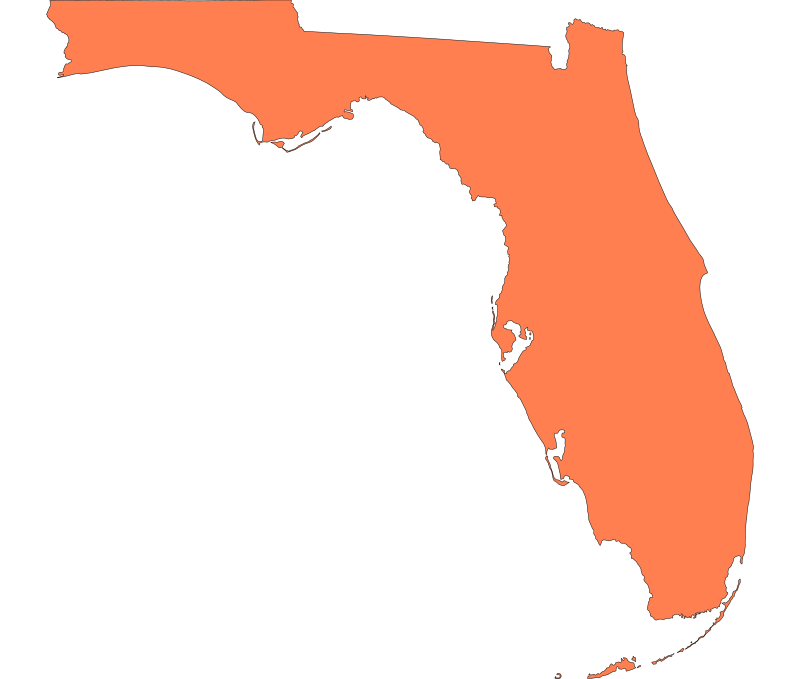
Florida
Explore Florida resources for property insurance claims, hurricanes, roof damage, water losses, claim disputes, and other insurance issues.
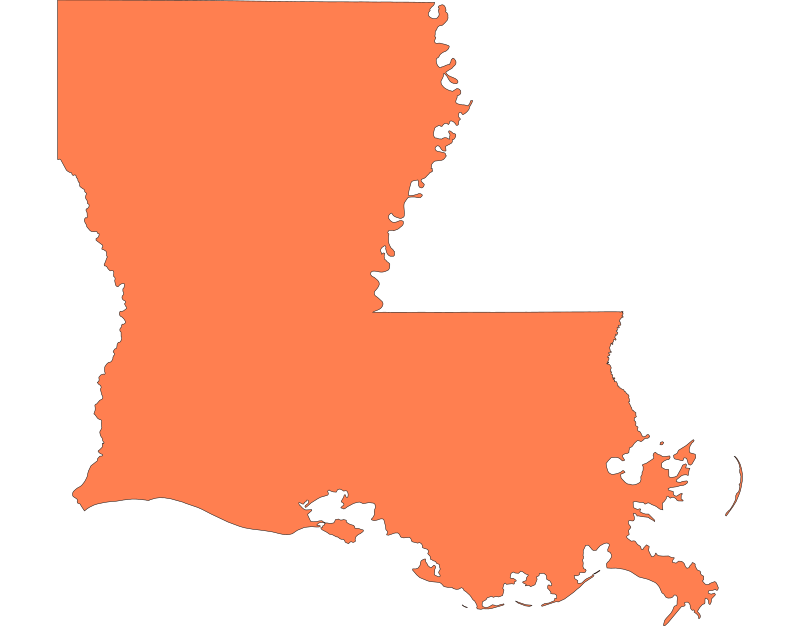
Louisiana
Find Louisiana resources for hurricane damage, wind claims, flooding, roof losses, and disputed property insurance claims.
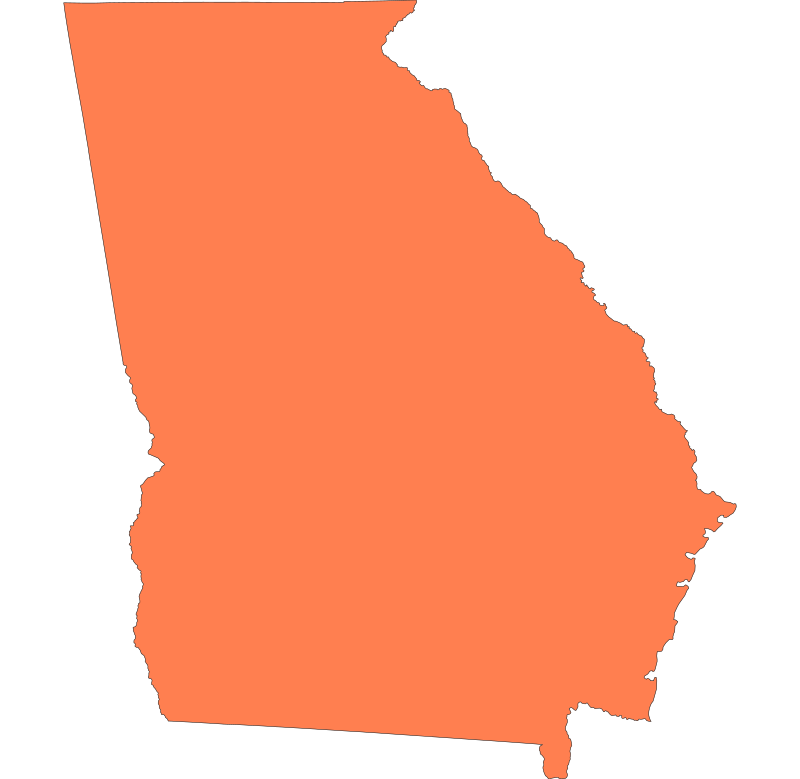
Georgia
Review Georgia property claim resources for severe storms, roof damage, wind, hail, water losses, and insurance disputes.

Mississippi
Access Mississippi resources for hurricane damage, wind claims, roof losses, flooding, and property insurance disputes.
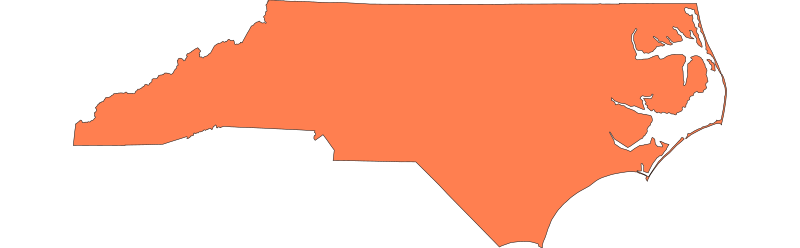
North Carolina
Explore North Carolina property claim resources for hurricanes, coastal storms, wind damage, flooding, roof claims, and insurance disputes.
Texas
Find Texas resources for hail, wind, severe storms, roof claims, water damage, and disputed insurance claims.
When reviewing a denial, policyholders should consider whether the insurer complied with the claim requirements that apply in their state and whether any state-specific deadlines or dispute procedures may affect the available options.
The Morgan Law Group’s state resource centers provide additional information about property damage risks, insurance claim issues, and resources relevant to each jurisdiction.
When Should You Consider Legal Help After a Property Insurance Claim Denial?
Not every denied property insurance claim requires legal action, but some disputes become more difficult when the insurer maintains the denial despite additional evidence or when important coverage and deadline issues are involved.
The Denial Relies on a Policy Exclusion
If the insurer is relying on an exclusion or limitation that appears inconsistent with the facts of the loss, the policy language may need closer review.
Major Damage Was Left Uncovered
When significant roof, water, wind, structural, or interior damage is denied, the financial impact of the coverage dispute can be substantial.
The Cause of Loss Is Disputed
Disputes involving wind, flood, wear and tear, maintenance, prior damage, or another cause may require a detailed review of inspections, weather records, and expert findings.
Reconsideration Was Unsuccessful
If the insurer continues to deny the claim after receiving additional evidence, the dispute may have moved beyond a routine documentation issue.
Important Deadlines May Apply
Policy and state-specific deadlines can affect notice, proof of loss, dispute procedures, supplemental submissions, or the time available to file a lawsuit.
The Claim Has Become Complex
Claims involving multiple causes of loss, conflicting reports, expert opinions, large repair costs, or repeated coverage disputes may benefit from a more detailed legal review.
A property damage attorney may review the insurance policy, denial letter, claim correspondence, estimates, inspection reports, photographs, and other documentation to help identify the issues affecting the claim.
The purpose of a legal review is to determine whether the denial is consistent with the policy and documented facts, whether additional claim remedies may be available, and whether any important deadlines need to be addressed.
Need Help With a Denied Property Insurance Claim?
If your property insurance claim has been denied or the insurer continues to deny coverage after additional evidence was submitted, The Morgan Law Group can review the policy, denial letter, damage documentation, and claim history.
Frequently Asked Questions About Denied Property Insurance Claims
These common questions can help property owners better understand what a denial may mean and what steps may be available after an insurance company refuses coverage or payment.
What should I do first if my property insurance claim is denied?
Start by reading the denial letter carefully and identifying the exact reason the insurer gave for denying the claim. Review the cited policy language, preserve all claim documents, and gather evidence that may address the disputed issue.
Does a denied property insurance claim mean the claim is over?
Not necessarily. Depending on the policy, facts, applicable law, and deadlines, a policyholder may be able to submit additional evidence, request reconsideration, seek a reinspection, or pursue other available claim remedies.
Why do insurance companies deny property damage claims?
Common reasons include policy exclusions, disputed causes of loss, alleged wear and tear, maintenance issues, late notice, pre-existing damage, or insufficient documentation.
Can I challenge a property insurance claim denial?
A denial may be challenged when the policyholder has evidence or policy language that addresses the insurer’s stated reason for the decision. The appropriate approach depends on the specific basis for denial and the available documentation.
What evidence can help with a denied property insurance claim?
Useful evidence may include photographs, videos, contractor estimates, inspection reports, expert findings, weather records, maintenance records, invoices, repair history, and communications with the insurance company.
Can I ask the insurance company to reinspect my property?
In some cases, a policyholder may request another inspection, particularly when additional damage has been documented, important conditions were overlooked, or new evidence becomes available.
What if the insurer says the damage was caused by wear and tear?
Evidence such as prior maintenance records, photographs, contractor findings, weather data, and inspection reports may help evaluate whether the damage resulted from long-term deterioration or a more recent covered event.
Can a property insurance claim be denied because it was reported late?
An insurer may raise late notice as a reason for denial depending on the policy and applicable law. The timing of when the damage was discovered, reported, inspected, and documented can become important in evaluating that issue.
When should I speak with a property damage attorney about a denied claim?
Legal review may be appropriate when the insurer maintains the denial after receiving additional evidence, relies on disputed policy language, denies substantial damage, disputes the cause of loss, or when important deadlines may apply.
